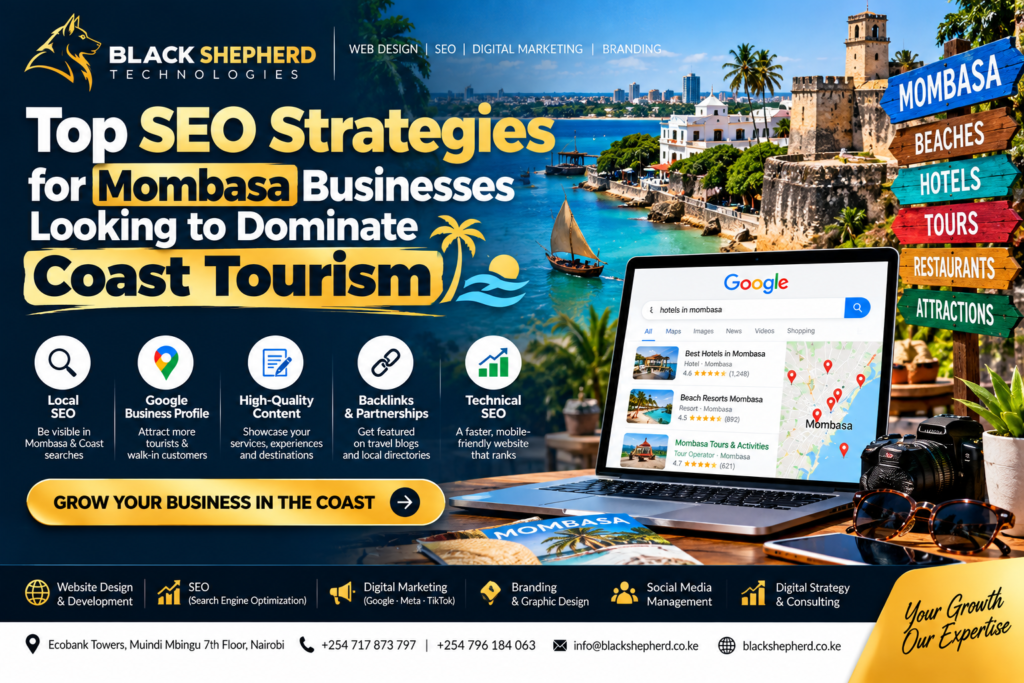
Mombasa is the Crown Jewel of East Africa’s coastal tourism industry. Stretching along the warm turquoise waters of the Indian Ocean, this historic island and its surrounding coastal corridors—from Diani and Nyali to Watamu and Malindi—attract hundreds of thousands of domestic and international travelers every single year. From pristine white-sand beaches and world-class marine parks to centuries-old Swahili culture, historic Fort Jesus, and vibrant luxury resorts, the Coast region offers an unmatched hospitality and leisure experience.
However, operating a tourism-related enterprise in Mombasa today requires much more than breathtaking ocean views and exceptional hospitality. The modern traveler’s journey begins long before they board a flight to Moi International Airport or pack their bags for a weekend road trip down the Mombasa-Nairobi Highway. It begins with a smartphone screen, a search engine query, and an intense digital competition for attention.
If your hotel, tour company, beachfront restaurant, marine excursion outfit, or car rental service is not ranking on the first page of Google when prospective travelers look for coastal getaways, you are surrendering your revenue to competitors. Implementing robust, region-specific optimization strategies for SEO Services in Kenya is the definitive key to capturing high-intent tourist traffic, filling booking calendars, and dominating the East African coastal market.
1. The Psychology of the Coastal Traveler: Understanding Search Intent
To build an unbeatable search engine optimization strategy in Mombasa, you must first understand how modern tourists plan their vacations. Consumer behavior in the travel and hospitality sector has undergone a massive digital transformation.
Gone are the days when travelers relied solely on physical travel agencies or heavy reliance on third-party aggregator sites that charge massive commission fees. Today’s travelers are self-directed researchers. They conduct extensive online queries weeks or even months before their trip, seeking authentic experiences, transparent pricing, and reliable service providers.
Categorizing Travel Search Queries
When optimizing your coastal business website, your content and keyword strategy must address three distinct phases of the traveler’s purchase funnel:
-
Inspirational and Research-Driven Queries:
-
“Best beach resorts in Nyali with ocean view”
-
“Things to do in Mombasa with family”
-
“Best time of the year to visit Diani Marine Park”
-
Travelers at this stage are browsing for ideas. Publishing comprehensive, engaging guides positions your brand as an authority early in their decision-making process.
-
-
Commercial and Comparison Queries:
-
“Deep sea fishing charters Mombasa price”
-
“Compare luxury hotels in Watamu”
-
“Car hire services Moi International Airport Mombasa”
-
At this point, travelers are actively narrowing down their options, comparing packages, reading reviews, and checking amenities.
-
-
Transactional and Booking Queries:
-
“Book beachfront villa Diani online”
-
“Last-minute SGR holiday packages Mombasa”
-
“Reserve sunset dhow cruise Mombasa creek”
-
These users have credit cards or M-Pesa ready. They want an instantaneous, friction-free booking process. If your website loads slowly or lacks clear calls to action, they will bounce to a competitor.
-
Examining successful digital transformations across various commercial sectors via our comprehensive portfolio and projects archive demonstrates how tailored keyword architecture and high-performance design directly elevate conversion rates for service-oriented businesses.
2. Optimizing for Local and Regional Tourism Dynamics
Mombasa’s tourism ecosystem thrives on two major pillars: international tourists seeking exotic tropical getaways, and domestic tourists (frequently referred to as “Go-Kenyans” or residents from Nairobi, Nakuru, and Kisumu) looking for weekend getaways, holiday celebrations, and corporate retreats.
Each segment has distinct search behaviors and linguistic preferences. While international visitors often search in standard English using global tourism terms, domestic travelers from Nairobi frequently search using localized phrasing like “sokoni weekend packages,” “best family hotels in Mombasa under 15k,” or “SGR inclusive holiday deals.”
Bridging Domestic and International Search Intent
To dominate Coast tourism, your digital assets must capture both audiences effectively:
-
Geo-Targeted Landing Pages: Create dedicated landing pages targeting specific feeder markets and coastal neighborhoods (e.g., “Weekend Getaway Packages from Nairobi to Nyali Beach” or “Luxury Honeymoon Villas in Diani Beach”).
-
Multi-Currency and Local Payment Integration: Domestic tourists expect seamless mobile payments such as M-Pesa STK push integration, while international guests require secure multi-currency credit card processing. Aligning your checkout experience with your SEO traffic ensures that high rankings successfully convert into completed bookings.
Different business models within the tourism sector require unique digital execution frameworks. Whether you operate a boutique hotel, an adventure tour company, or an upscale dining establishment, reviewing the specialized industries we serve highlights how customized optimization strategies align digital visibility with sector-specific consumer expectations.
3. Core SEO Pillars for Mombasa Tourism Enterprises
Executing a dominant search optimization campaign along the Kenyan coast requires a meticulous, multi-layered technical and creative approach. Below are the foundational pillars every coastal business must master.
Pillar 1: Local Map Pack Dominance (Google Business Profile)
When a tourist arrives in Mombasa or plans their itinerary from a hotel room, they rely heavily on Google Maps to find nearby restaurants, beach access points, water sports rentals, and accommodation.
-
Category Optimization: Ensure your Google Business Profile features accurate primary and secondary categories (e.g., Resort Hotel, Seafood Restaurant, Tour Operator).
-
Geotagged Visuals: Upload high-resolution, professionally captured photos of your rooms, ocean views, dining spaces, and tour activities. Google’s image recognition algorithms index visual content, and prospective travelers heavily favor listings with vibrant, authentic photography.
-
Review Velocity and Management: Tourism is an experience-driven industry. Actively prompt satisfied guests to leave positive Google reviews detailing specific staff members, cleanliness, and overall experience. Promptly and professionally address any negative reviews to demonstrate commitment to customer satisfaction.
Pillar 2: Technical Performance and Mobile-First Speed
A vast majority of holiday research and booking decisions happen on smartphones while users lounge on the beach, ride the Standard Gauge Railway (SGR), or relax in airport terminals. If your website suffers from sluggish loading times or broken elements on mobile devices, search engines will penalize your rankings, and users will abandon your pages.
-
Lightning-Fast Hosting and Asset Compression: Optimize high-resolution resort and tour imagery so they load instantly without compromising visual appeal.
-
Core Web Vitals Compliance: Ensure your layout stability, interactivity speeds, and visual loading metrics meet Google’s strict performance benchmarks.
Pillar 3: Content Marketing That Captures the Coastal Magic
Content is the heartbeat of tourism SEO. Generic descriptions will not convince a traveler to choose your property over hundreds of alternatives along the coastline. Your content must evoke the sensory experience of a coastal holiday while answering practical travel questions.
-
In-Depth Travel Guides: Publish comprehensive articles such as “The Ultimate Guide to Scuba Diving in Watamu Marine Park,” “Navigating Mombasa’s Historical Sites: A Self-Guided Tour of Old Town and Fort Jesus,” or “Top 10 Family-Friendly Beach Resorts in Diani for 2026.”
-
Addressing Travel Logistics: Create informative content answering logistical concerns, such as “How to Travel from Moi International Airport to Diani Beach,” “SGR Booking Tips for Weekend Travelers,” and “Best Time of Year for Deep Sea Fishing off the Kenyan Coast.” This captures top-of-funnel traffic and builds trust.
4. Advanced Growth Tactics: Link Building and Authority in the Travel Sector
In the highly competitive travel industry, search engines evaluate your domain authority not just on the quality of your on-page content, but significantly on who links to your website. Earning high-quality backlinks signals to Google that your resort, tour company, or restaurant is recognized and trusted within the broader East African tourism ecosystem.
High-Impact Link Building Strategies for Coastal Businesses:
-
Collaborate with Travel Bloggers and Influencers: Invite reputable travel journalists, photographers, and lifestyle influencers from Nairobi and international markets to experience your property or tour. In exchange for hosting them, secure authoritative editorial backlinks from their travel blogs and digital travel magazines.
-
Partnerships with Regional Tourism Boards: Forge collaborative digital partnerships with Magical Kenya, county tourism directorates, and hospitality associations. Being featured on official regional tourism portals generates powerful, high-authority backlinks that rapidly elevate your domain ranking.
-
Press Releases and Event Sponsorships: Sponsor local marine conservation initiatives, beach clean-ups, or cultural festivals like the Lamu Cultural Festival or Mombasa Raha events. These activities frequently attract press coverage from major Kenyan media houses, earning invaluable editorial links.
5. Measuring Success: Tracking Bookings and ROI from Coastal SEO
Investing in search engine optimization must yield clear, measurable business returns. Unlike traditional billboard advertising along the highway—where tracking exact conversions is nearly impossible—organic search provides crystal-clear attribution data when configured correctly.
Key Performance Indicators (KPIs) to Monitor:
-
Organic Search Traffic Growth: Track the volume of unique visitors arriving at your website via non-paid search engine results, segmented by geographic origin (e.g., Nairobi vs. international visitors).
-
Booking Conversion Rate: Monitor the percentage of organic visitors who complete a reservation form, booking engine transaction, or WhatsApp inquiry.
-
Google Business Profile Engagement: Measure actions taken directly from your map listing, including website clicks, direction requests, and phone calls.
-
Keyword Ranking Progression: Track your movement across high-intent commercial keywords (e.g., tracking your ascent from page 3 to the coveted top 3 positions for “luxury beachfront resort Diani”).
By combining technical precision, localized content creation, and an exceptional digital user experience, your Mombasa-based enterprise can build a resilient digital asset that generates consistent bookings year-round—independent of seasonal advertising budget fluctuations.
Conclusion and Next Steps
The Kenyan coast offers some of the most breathtaking destinations in the world, but beauty alone is no longer enough to guarantee high occupancy rates and thriving tour bookings. In a digital-first economy, visibility dictates profitability. If your competitors occupy the top search spots while your business remains buried on page two, you are losing valuable guests every single day.
By partnering with experts who understand the unique intersection of digital technology, local market dynamics, and hospitality consumer behavior, you can transform your website into a powerful, automated booking engine.
Ready to elevate your coastal enterprise, outrank your competitors, and dominate Coast tourism? Explore our proven methodologies, review our past success stories, and discover how tailored digital solutions can scale your brand. Take the first step toward sustained commercial growth by visiting Black Shepherd Technologies today.