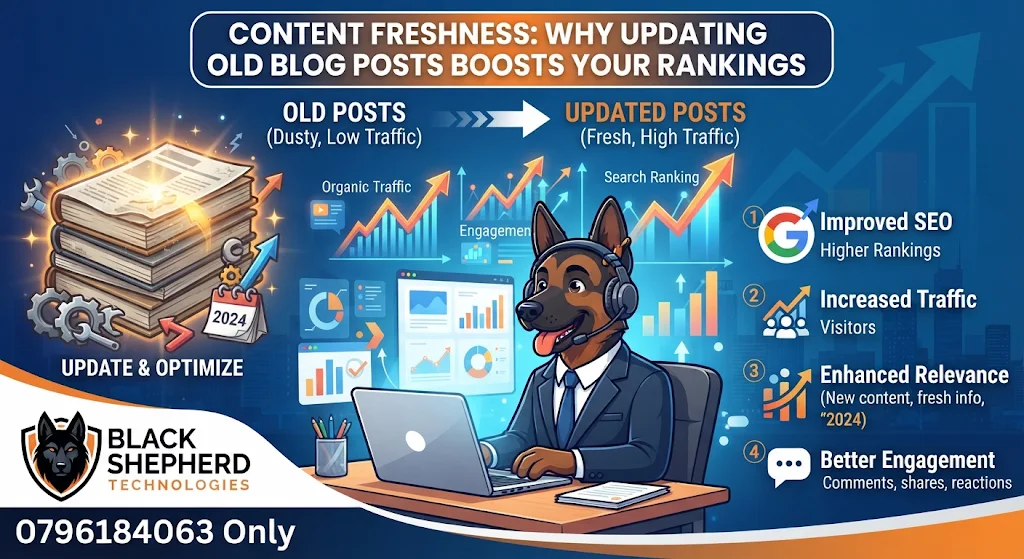
Updating old blog posts is one of the highest-leverage ways to grow organic search traffic because content freshness aligns existing, already-indexed assets with current search intent, accurate facts, and user satisfaction—often delivering faster ranking gains than publishing brand-new posts from scratch.
Real content freshness is not changing a publish date or swapping a few words. It is systematically removing outdated advice, correcting stale statistics, expanding incomplete sections, and making sure the page genuinely satisfies today’s reader better than competing results.
Why Content Freshness Matters in Search
Search engines do not treat freshness as a single one-size-fits-all switch; how much recency matters depends heavily on the query. Even so, keeping established pages current supports ranking performance across several interconnected mechanisms:
-
Freshness sensitivity by query type: Queries tied to evolving tools, regulations, pricing, annual benchmarks, fast-moving news, or shifting best practices demand current answers. Even for evergreen topics, outdated screenshots, deprecated features, or old numbers erode trust and usefulness.
-
Shifting search intent over time: How people search for a topic changes. A query that once called for a basic overview may now require side-by-side comparisons, step-by-step execution, or answers to newer sub-questions.
-
Compounding equity on existing URLs: Brand-new pages start without backlinks, crawl history, or established engagement signals. Older posts that already have indexation history, internal links, or external backlinks often respond faster when you upgrade their substance.
-
User satisfaction and engagement: When a searcher lands on a post with accurate data, clear structure, and practical depth, they are more likely to stay, read, and engage rather than bounce back to the results.
-
Accuracy, E-E-A-T, and AI visibility: Accurate, well-attributed, up-to-date information strengthens perceived expertise and trustworthiness—both for human readers and for search/AI features that summarize or cite reliable sources.
Which Blog Posts to Refresh First (and Which Not to)
Not every old post deserves a rewrite. Prioritize pages using data from Google Search Console and your analytics platform:
| Post Profile | Signal to Look For | Best Action | Why It Pays Off |
| Striking-distance winners | Ranking roughly in positions 4–20 with solid impressions | Refresh & expand | Small improvements in depth, clarity, and intent match can push them onto page one or into top positions. |
| Decaying legacy posts | Steady traffic/click drop over 3–12 months despite past performance | Audit & update | Usually caused by outdated facts, lost intent alignment, or stronger competitor updates. |
| High-impression, low-CTR posts | Lots of impressions but few clicks | Refine title, intro & structure | Better alignment with what searchers actually want—without clickbait—improves click appeal and relevance. |
| Thin or overlapping posts | Low traffic, thin copy, or multiple posts covering the same topic | Consolidate (301) or prune |
Merging overlapping posts into one strong resource avoids self-competition and concentrates ranking signals. |
| Healthy evergreen top performers | Growing or steady traffic and accurate information | Light maintenance only | Avoid overhauling pages that already work well; fix broken links or minor dated details sparingly. |
A Practical 6-Step Content Refresh Workflow
-
Audit current performance and intent: Check impressions, clicks, average position, and top queries in Search Console alongside engagement metrics. Look at what currently ranks on page one to see what format and depth searchers expect now.
-
Strip out outdated facts, tools, and claims: Replace old statistics, expired dates, deprecated workflows, and outdated UI references with current, verifiable information.
-
Fill gaps and sharpen structure: Add missing subtopics, clear headings, scannable lists or tables, and direct answers early in each section so readers can find what they need quickly.
-
Fix links and refresh media: Repair broken external links, update references to newer sources, add relevant internal links to and from related posts, and replace stale screenshots or visuals.
-
Update dates honestly: Only display or update a “last updated” date when you have made substantive improvements to the content—never for cosmetic tweaks alone.
-
Request re-indexing and track results: Submit key updated URLs via URL Inspection → Request Indexing in Search Console, then monitor impressions, clicks, and rankings over the next several weeks.
Common Mistakes That Hurt Content Refreshes
-
Date-jacking without real substance: Changing the date without improving the content misleads readers and rarely produces lasting ranking gains.
-
Changing the URL slug unnecessarily: Unless there is a clear structural reason—paired with a proper
301redirect—keep existing URLs intact so you preserve accumulated ranking signals and links. -
Bloating posts with fluff: Adding filler words or repetitive AI-sounding padding to hit an arbitrary word count hurts readability and user satisfaction. Add depth only where it genuinely answers reader questions.
-
Ignoring internal links: Even a great refresh struggles if orphaned or buried behind weak internal links. Connect updated posts naturally from relevant hub and supporting pages.