In Kenya’s rapidly digitizing commercial marketplace, business leaders and marketing executives frequently face a frustrating strategic dilemma. On one hand, Pay-Per-Click (PPC) advertising (such as Google Search Ads, Meta ads on Instagram and Facebook, and dynamic TikTok inventory) offers immediate visibility, placing a brand front-and-center in front of eager consumers within hours. On the other hand, organic brand awareness and search engine optimization (SEO) build enduring market trust, long-term equity, and sustainable traffic—yet require months of meticulous technical execution to mature.
Treating PPC and organic marketing as competing silos is a costly strategic error. When managed independently, ad budgets inflate, organic campaigns stall, and the brand message fragments across channels.
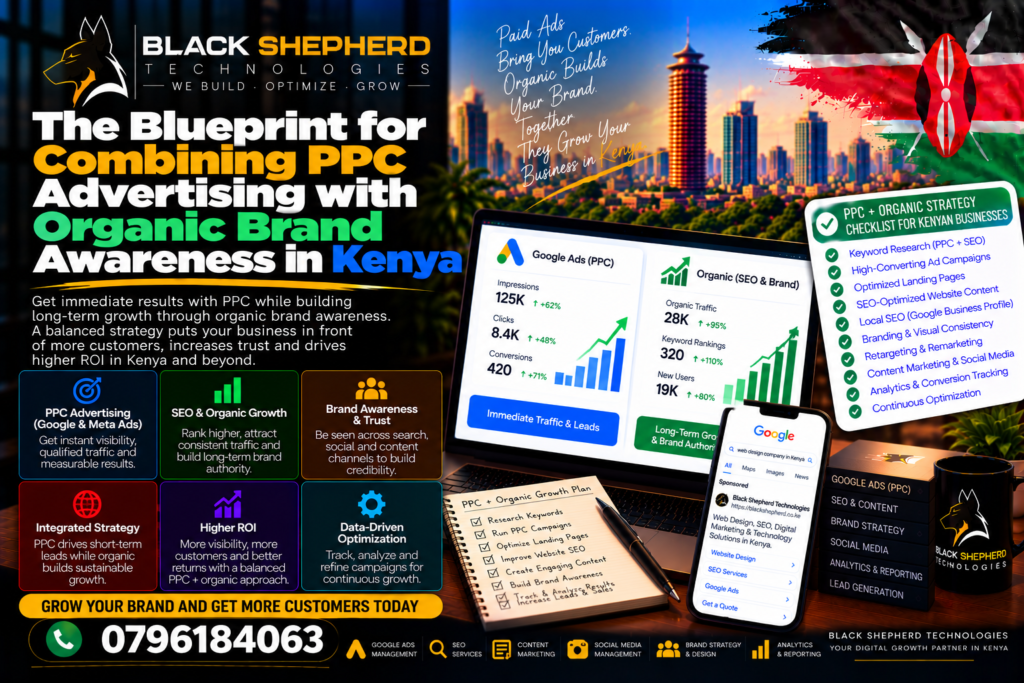
The most successful enterprises in Nairobi and across East Africa bridge this divide. By combining the instant data-gathering and velocity of PPC with the compounding authority of organic brand building, businesses create a dominant digital presence. In this comprehensive blueprint, we will explore the exact frameworks required to harmonize paid search and social campaigns with long-term organic strategies for maximum market impact.
1. The Synergistic Power of Combining Paid and Organic Channels
To understand why integration works, we must analyze the distinct psychological and functional roles each channel plays in the consumer decision-making journey.
-
PPC Advertising (The Sprinter): Delivers instant market penetration. It captures high-intent transactional search traffic, launches new products overnight, dominates competitive seasonal keywords (such as festive retail surges or corporate year-end procurement), and provides rapid data feedback loops.
-
Organic Brand Awareness (The Marathoner): Builds institutional credibility, thought leadership, and emotional resonance. When consumers see a brand ranking organically at the top of Google while simultaneously appearing via targeted paid ads, psychological validation occurs. This dual presence signals market dominance and supreme trustworthiness.
When these two forces operate in sync, they multiply each other’s effectiveness rather than operating in isolation.
2. Phase 1: Keyword and Audience Data Cross-Pollination
The greatest advantage of running a PPC campaign long before an SEO strategy fully matures is data velocity. Paid search campaigns yield immediate quantitative insights into consumer behavior.
1. Using PPC Data to Inform Organic Content Strategy
-
High-Intent Keyword Discovery: Instead of guessing which keywords your target audience uses, run targeted Google Search Ads across various semantic variations. Review search term reports to identify exact phrasing, local slang, and long-tail queries typed by Kenyan consumers.
-
Testing Ad Copy for Organic Meta Descriptions: Before committing hundreds of hours to writing long-form organic blog posts or landing pages, test different headline angles, value propositions, and emotional hooks via Meta or Google ad variations. Whichever copy generates the highest click-through rate (CTR) in paid ads should serve as the blueprint for your organic title tags and meta descriptions.
3. Phase 2: Dominating Search Engine Real Estate (SERP Takeover)
When a prospective customer searches for a high-value commercial query in Kenya (e.g., “best enterprise software solutions Nairobi” or “top digital marketing agency”), screen space is limited. Relying solely on organic ranking leaves you vulnerable to competitors running ads directly above you.
Achieving Maximum SERP Visibility
-
The Double-Barrel Effect: By combining a top-ranking organic listing with a prominent Google Search Ad, your brand occupies maximum visual real estate at the top of the mobile or desktop screen.
-
Defensive Bidding: Even if you rank number one organically, competitors can bid on your brand name. Running branded PPC campaigns ensures you control your brand’s digital narrative, protect your market share, and prevent rivals from intercepting your warm traffic.
4. Phase 3: Retargeting Organic Visitors with Precision Paid Media
Organic traffic is invaluable, but the reality of digital behavior is that the vast majority of first-time website visitors do not convert immediately. They browse, compare options, and leave. Letting that hard-earned organic traffic vanish is a massive missed opportunity.
The Organic-to-Paid Retargeting Funnel
-
Capture via Organic SEO: High-ranking educational blog posts or local guides attract thousands of organic search visitors.
-
Pixel Tracking & Audience Segmentation: Install Meta Pixels, Google Tag Manager event tracking, and GA4 custom audience parameters to segment users based on the specific pages they consumed (e.g., visitors who read an article on mobile optimization vs. those who checked pricing tiers).
-
Deploy Retargeting Ads: Serve tailored paid ads across Instagram, Facebook, or YouTube to those exact organic visitors, offering case studies, limited-time consultations, or tailored lead magnets that nudge them across the conversion line.
5. Phase 4: Creative Consistency Across Paid and Organic Touchpoints
Just as asset standardization across web and social media is vital for brand integrity, visual and narrative continuity between paid ads and organic touchpoints is mandatory for conversion success.
Eliminating Cognitive Friction
-
The Landing Page Mirror Effect: If a user clicks a vibrant, urgent TikTok or Meta ad promising a specific solution, the landing page they arrive on must mirror that exact visual theme, color palette, headline structure, and value proposition.
-
Unified Brand Voice: Whether a consumer discovers your enterprise via a sponsored LinkedIn ad, an organic Google search result, or a WhatsApp business catalog link, the tone of voice and creative direction must remain unbroken.
6. Phase 5: Holistic Attribution and ROI Measurement
Traditional marketing evaluations often analyze PPC and SEO in separate reports, masking their true interdependent impact. Modern digital analytics requires a unified dashboard.
Key Metrics for an Integrated Strategy
-
Blended Customer Acquisition Cost (CAC): Evaluate how the influx of instant PPC leads combined with organic inbound inquiries lowers your overall blended acquisition cost over time.
-
Assisted Conversions: Use multi-channel funnel reports in Google Analytics to track how many users initially discovered your brand via organic search, later clicked a retargeting ad, and ultimately converted.
-
Organic Lift from Paid Spend: Observe how targeted paid brand awareness campaigns correlate with direct increases in branded organic search volume month over month.
Comparative Analysis: Isolated Channels vs. Integrated Paid-Organic Strategy
| Evaluation Dimension | Isolated Silos (PPC and SEO Separate) | Integrated Paid-Organic Strategy |
| Data Utilization | SEO relies on slow historical data; PPC data is locked away from content teams. | Rapid PPC keyword and copy insights feed directly into long-term organic content creation. |
| SERP Dominance | Competitors easily capture ad space above your organic listing or vice versa. | Maximum visibility achieved by owning both top paid ad slots and top organic rankings simultaneously. |
| Traffic Retention | First-time organic visitors bounce and are lost forever with no follow-up. | Organic visitors are tracked, segmented, and retargeted seamlessly via precision PPC funnels. |
| Brand Perception | Fragmented messaging and disconnected visual experiences across touchpoints. | Unified creative direction and seamless messaging from first ad impression to organic checkout. |
| Budget Efficiency | High wasted spend on inefficient ad targeting and siloed marketing tools. | Optimized budget allocation driven by cross-channel data and compounding organic growth. |
Conclusion: The Ultimate Competitive Advantage
Combining PPC advertising with organic brand awareness in Kenya is no longer an experimental luxury—it is the definitive hallmark of mature digital leadership. By using paid search and social campaigns to capture immediate traffic and test messaging data, while leveraging organic SEO and consistent creative direction to build enduring trust and authority, businesses insulate themselves against rising ad costs and algorithmic shifts.
When paid velocity and organic equity unite, your digital presence transforms from a series of scattered marketing tactics into a resilient, self-sustaining revenue engine.