The digital marketplace across Kenya has grown remarkably sophisticated. From corporate boardrooms in Upper Hill and tech hubs in Westlands to dynamic retail centers in Mombasa, Nakuru, and Kisumu, business owners increasingly recognize that a website is a vital commercial asset. However, simply launching a website and publishing a few pages is no longer enough to secure visibility on search engine results pages (SERPs).
Many organizations invest time and capital into digital marketing, only to watch their websites stagnate without traffic or inquiries. Often, the culprit is not a lack of effort, but rather avoidable technical and strategic missteps. Recognizing these pitfalls—and knowing how to correct them—can completely transform your brand’s digital visibility and revenue growth.
In this comprehensive guide, we will explore the most common SEO mistakes made by Kenyan businesses and provide actionable solutions to fix them.
1. Ignoring or Inadequately Optimizing Google Business Profile (GBP)
For businesses operating physical offices, retail shops, or local service areas, one of the most damaging mistakes is failing to claim or fully optimize their Google Business Profile.
When a user in Nairobi searches for “plumber near me” or “hardware store in Mombasa Road”, Google displays the local map pack before organic web results. If your profile is unverified, missing operating hours, or displays outdated contact details, you forfeit high-intent local customers directly to your competitors.
How to Fix It:
-
Claim and Verify: Go to Google Business Profile and verify your physical location.
-
Complete All Fields: Add accurate operating hours, official phone numbers, your exact street address, and high-resolution photos of your premises.
-
Encourage Reviews: Establish a consistent workflow to gather and respond to customer reviews, which heavily influence local map rankings.
For organizations looking to build an airtight local digital infrastructure, leveraging comprehensive SEO Services Kenya ensures that your map listings and technical signals are fully optimized for maximum regional impact.
2. Targeting Corporate Jargon Instead of Real Search Intent
A common error is choosing keywords based on internal company terminology rather than what customers actually type into search bars. For example, a firm might describe its services as “Integrated Business Digital Solutions” while potential clients are searching for “affordable web design Nairobi” or “tax filing assistance Kenya”.
How to Fix It:
-
Talk to Your Sales Team: Review customer inquiries, support emails, and phone conversations to identify the exact phrasing clients use to describe their problems.
-
Focus on Commercial Intent: Target long-tail, localized keywords (e.g., “employment lawyer Nairobi CBD” instead of just “lawyer”) to attract users ready to convert.
3. Overlooking Mobile Speed and Performance
With the vast majority of web traffic in Kenya originating from smartphones operating on mobile cellular data networks, ignoring mobile user experience is disastrous. Many businesses build websites using heavy desktop themes loaded with uncompressed images, bloated plugins, and excessive scripts. If a page takes longer than three seconds to load, mobile users bounce immediately.
How to Fix It:
-
Compress Media Files: Convert heavy image formats into lightweight WebP files before uploading them to your catalog or blog.
-
Audit Core Web Vitals: Test your mobile performance using Google PageSpeed Insights and eliminate unnecessary plugins that drag down server response times.
4. Keyword Stuffing and Publishing Low-Quality Content
Some business owners assume that repeating a keyword dozen of times across a page or publishing hundreds of thin, auto-generated blog posts will trick search algorithms into ranking them higher. In reality, modern search engines penalize keyword stuffing and low-value content.
How to Fix It:
-
Write for Humans First: Incorporate keywords naturally where they genuinely serve the context of the discussion.
-
Focus on Depth and Value: Create comprehensive, original content that thoroughly answers the user’s query, integrating local context and expert insights.
To examine how high-performing content structures and custom digital frameworks are deployed across complex commercial projects, exploring verified case studies via Portfolios and Projects offers clear visual and structural benchmarks.
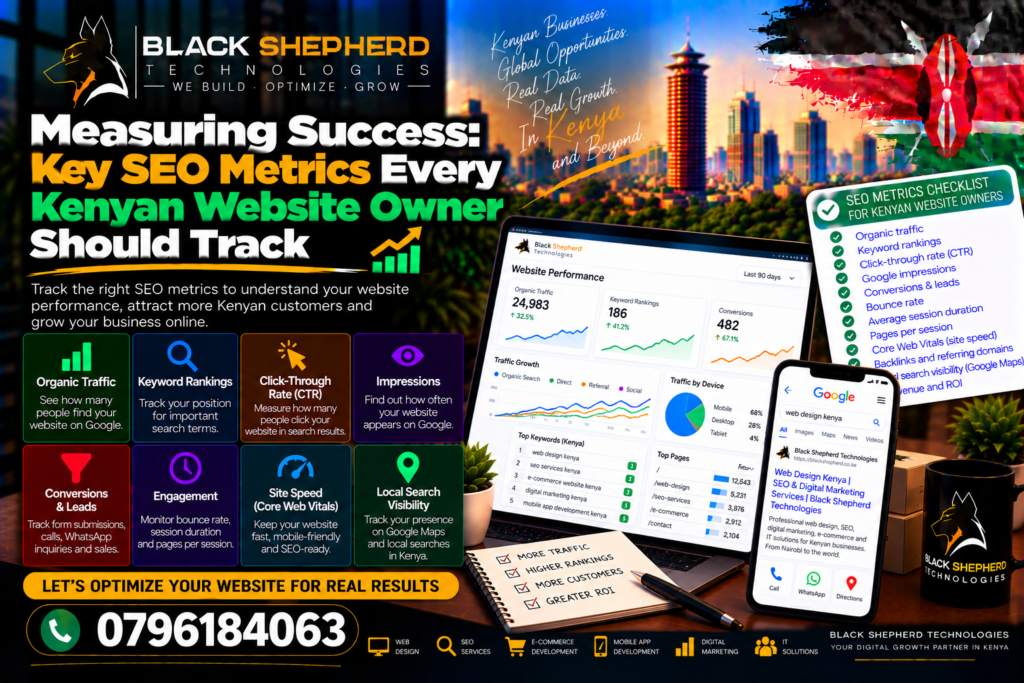
5. Failing to Track Analytics and Conversion Metrics
Many companies invest in SEO but never install proper tracking tools, leaving them blind to what is actually driving business growth. If you only monitor raw visitor counts without tracking form submissions, phone call clicks, or M-Pesa checkout completions, you cannot calculate your true return on investment.
How to Fix It:
-
Install Google Analytics 4 (GA4): Properly configure GA4 and Google Search Console to track user behavior, click-through rates, and conversion events.
-
Monitor Meaningful KPIs: Focus on qualified leads, organic revenue growth, and conversion paths rather than vanity metrics like arbitrary keyword positions.
Summary of Common SEO Mistakes and Quick Fixes
To explore how tailored SEO systems are engineered for diverse commercial landscapes and unique business models, you can examine our customized frameworks via Industries We Serve.
Conclusion
SEO is not a one-time checklist item; it is an ongoing commitment to serving your audience with speed, clarity, and relevance. By avoiding common pitfalls—such as ignoring local map profiles, targeting abstract keywords, neglecting mobile speed, and failing to track conversions—you can turn your website from an idle digital brochure into a powerful lead-generation engine.
Audit your website today, eliminate these critical bottlenecks, and position your business at the forefront of search results in Kenya’s competitive digital economy.