The East African digital landscape is experiencing unprecedented growth. From bustling enterprises in Westlands, Nairobi, to retail ventures in Mombasa, Kisumu, and Nakuru, businesses are aggressively migrating online to capture a digital consumer base that conducts millions of Google searches daily. Kenya’s high mobile smartphone penetration and affordable data rates have transformed search engines into the primary battleground for customer acquisition.
However, despite this massive opportunity, many business owners, marketing managers, and entrepreneurs in Kenya continue to lose market share, burn through marketing budgets, or struggle with stagnant website traffic. The root cause is rarely a lack of effort or budget—it is the reliance on outdated, misleading, or flat-out false Search Engine Optimization (SEO) information.
Misconceptions about how Google ranks websites in the local Kenyan market abound. Some entrepreneurs treat SEO as a quick one-off task, while others dump millions of Shillings into paid ads while neglecting organic search entirely.
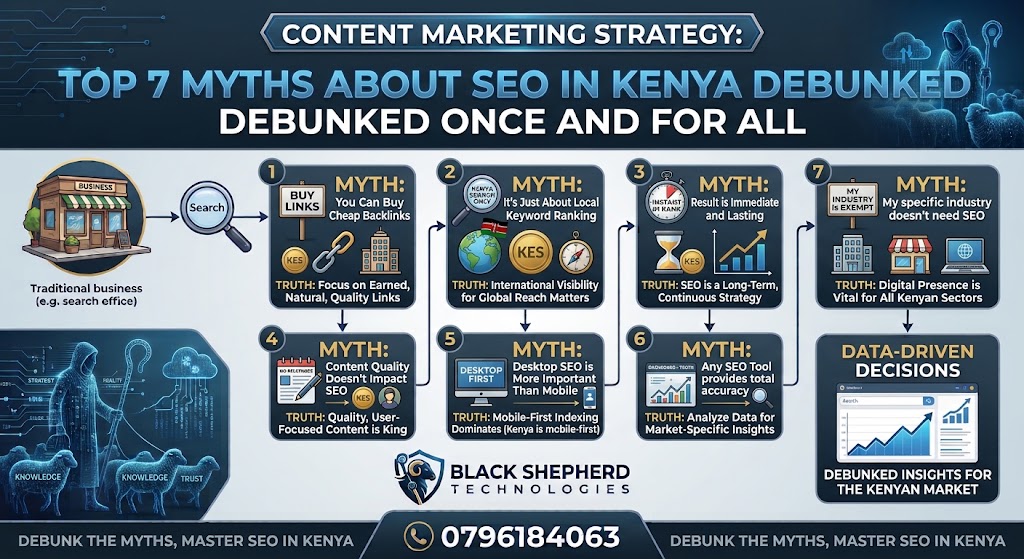
In this comprehensive guide, we unpack and debunk the top 7 SEO myths in Kenya once and for all. We also dive deep into actionable, modern strategies that drive organic traffic, generate qualified leads, and deliver continuous revenue growth.
Myth 1: SEO is a One-Time Setup Project
The Lie: “Once my web developer builds the site and fills out the meta titles, SEO is complete and my website will rank forever.”
This is perhaps the single most dangerous misunderstanding among Kenyan business owners. Many companies treat SEO like a physical building project—once the structure is up and painted, the work is done.
The Reality
SEO is not a static product; it is an ongoing, dynamic process. Google updates its search algorithms hundreds of times every year. Furthermore, consumer search behavior in Kenya constantly evolves, and your market competitors are continuously updating their websites, publishing content, and acquiring new backlinks.
If you optimize your website once and ignore it for six months, your search positions will steadily decline. Broken internal links, outdated content, technical creep, changing user search intent, and aggressive competitor strategies will quickly push your site down Google’s search engine results pages (SERPs).
┌────────────────────────────────────────────────────────────────────────┐
│                        THE SEO REVENUE FLYWHEEL                        │
├────────────────────────────────────────────────────────────────────────┤
│                                                                        │
│    ┌─────────────────┐       Technical Audits       ┌───────────────┐  │
│    │  Content Expansion │ ──────────────────────────► │ Keyword & Intent│ │
│    └────────┬────────┘                              └───────┬───────┘  │
│             │                                               │          │
│             │ Continuous Updates            Competitor      │          │
│             ▼                               Analysis        ▼          │
│    ┌─────────────────┐                              ┌───────────────┐  │
│    │ Rank & Traffic  │ ◄─────────────────────────── │ Backlink &    │  │
│    │ Retaining       │       Authority Building     │ Citations     │  │
│    └─────────────────┘                              └───────────────┘  │
│                                                                        │
└────────────────────────────────────────────────────────────────────────┘
Why Continuous SEO Is Mandatory in Kenya
-
Algorithm Adaptability: Google’s search algorithms heavily prioritize fresh, authoritative, and helpful content over stale pages.
-
Competitor Pressure: In high-value Kenyan industries (such as real estate, financial services, e-commerce, legal services, and hospitality), your rivals are actively investing in monthly campaigns. Pausing your campaign gives them a free pass to outrank you.
-
Content Decay: Information changes. A guide on “Tax Returns in Kenya” written three years ago will contain outdated tax bracket figures, rendering it useless to searchers and triggering higher bounce rates.
The Solution
Treat organic search visibility as an operational routine. A resilient web presence requires continuous content maintenance, technical site health monitoring, local link acquisition, and keyword gap analysis. For businesses aiming to build long-term dominance, working with proven SEO services in Kenya guarantees that your website adapts dynamically to algorithmic shifts and market competition.
Myth 2: Keyword Stuffing Will Get You to the Top of Google
The Lie: “If I repeat the phrase ‘Best Law Firm in Nairobi’ 50 times across my homepage, Google will rank my page #1.”
In the early 2000s, search engine spiders were primitive. They evaluated page relevance primarily by counting how many times a target search string appeared within a block of text. This led to keyword-stuffed sites filled with unnatural sentences like: “If you are looking for the best law firm in Nairobi, our law firm in Nairobi is the best law firm in Nairobi for all Nairobi legal services.”
The Reality
Keyword stuffing has been obsolete for over a decade, and using it today is a fast track to algorithmic penalty. Modern search engines rely on sophisticated machine learning models, Natural Language Processing (NLP), and semantic entities.
Google does not count word repetitions. Instead, it analyzes search intent, topical completeness, contextual semantics, and user experience. If a human reader finds your copy repetitive, annoying, or difficult to read, Google’s algorithms will recognize the poor user experience metrics (such as high bounce rates and short time-on-page) and demote your rankings.
   TRADITIONAL KEYWORD STUFFING               MODERN SEMANTIC CONTENT
┌───────────────────────────────────┐    ┌───────────────────────────────────┐
│ • Repeats exact phrase repeatedly  │    │ • Focuses on Search Intent        │
│ • Ignores context & user intent   │ vs │ • Uses LSI & semantic variations  │
│ • Creates poor readability        │    │ • Delivers high topical depth     │
│ • Triggers Google Penalties       │    │ • Solves user queries naturally   │
└───────────────────────────────────┘    └───────────────────────────────────┘
Keyword Stuffing vs. Semantic Optimization
| Optimization Metric | Old Keyword Stuffing Approach | Modern Semantic SEO Approach |
| Primary Goal | Manipulation of query matching engines | Comprehensive coverage of user intent |
| Keyword Target | Exact match repetition (e.g., 5% density) | Primary target + semantic variants & entities |
| Readability | Robotic, repetitive, and unnatural | Natural, engaging, and authoritative |
| User Signals | High bounce rates, low dwell time | Higher conversion rates, longer dwell time |
| Search Engine Result | Manual or algorithmic search penalty | Sustainable ranking across hundreds of queries |
The Solution
Focus on Topical Authority. Write for human beings first, then optimize for search engine crawlers.
Instead of forcing exact phrases into paragraphs, address subtopics, answer common client questions, include structured FAQ sections, and use semantic terms natural to your industry. To see real-world execution of user-centric, conversion-focused web development and search structure, explore our featured portfolios and projects to see how industry leaders structure site architecture effectively.
Myth 3: Social Media Presence Replaces the Need for SEO
The Lie: “I have 50,000 followers on Instagram and TikTok, so I don’t need a website or search engine optimization.”
Social media platforms have experienced massive adoption across Kenya. Brands routinely run campaigns on TikTok, Instagram, X (formerly Twitter), and Facebook to engage audiences. This leads many business owners to conclude that an active social media profile renders a custom website and search strategy unnecessary.
The Reality
Social media and search engines serve fundamentally different roles in the consumer buying journey:
-
Rented Land vs. Owned Digital Assets: Your social media channels reside on rented property. Platform policy shifts, algorithm tweaks, account suspensions, or reach reductions can decimate your audience overnight. Your website is an asset you own completely.
-
Search Intent vs. Passive Scrolling: Social media relies on interruption marketing. Users scroll through feeds to be entertained or informed; they are not necessarily looking to buy. Google search relies on high-intent discovery. When a corporate client searches Google for “commercial audit firm in Westlands”, they have immediate intent and a budget ready to deploy.
-
Information Lifecycle: A social media post has a active lifespan of 5 to 48 hours before disappearing down the feed. A well-optimized SEO asset or blog post gains authority over time, attracting qualified leads continuously for years.
  SOCIAL MEDIA MARKETING                      SEARCH ENGINE OPTIMIZATION
┌───────────────────────────────┐           ┌───────────────────────────────┐
│ • Interruption Marketing      │           │ • High-Intent Discovery       │
│ • Short Post Lifespan (Hours) │    VS     │ • Long-Term Asset (Years)     │
│ • Rented Digital Property     │           │ • Owned Digital Real Estate   │
│ • Audience Distraction        │           │ • Direct Problem Solving      │
└───────────────────────────────┘           └───────────────────────────────┘
How Social Media and SEO Work Together
Social channels shouldn’t replace SEO; they should amplify it.
-
Social platforms drive referral traffic to your site.
-
Brand mentions across social platforms build offline brand awareness, leading to higher direct brand searches on Google.
-
Social media profiles often rank on page one of Google for branded query terms, helping control your brand reputation.
Myth 4: Google Ads (PPC) Help Your Organic Rankings
The Lie: “If I spend KES 100,000 a month on Google Pay-Per-Click (PPC) advertising, Google will reward my website with higher organic rankings.”
A widespread belief among Kenyan business executives is that paying Google for ads directly influences organic search placement. Some agency sales reps even perpetuate this belief to encourage clients to spend more on ad campaigns.
The Reality
Google maintains a strict division between its paid advertising department (Google Ads) and its organic search indexing systems.
Running Google Ads will not elevate your organic search rankings, nor will stopping your ad campaigns lower your organic placement.
+-------------------------------------------------------------------------+
|                         GOOGLE SERP STRUCTURE                           |
+-------------------------------------------------------------------------+
| [AD] Sponsored Listing 1  ─┐                                            |
| [AD] Sponsored Listing 2   ├─► Managed via Google Ads (Pay-Per-Click)   |
+----------------------------┴--------------------------------------------+
| [MAPS] Local 3-Pack        ──► Managed via Google Business Profile & GBP|
+-------------------------------------------------------------------------+
| Organic Result #1          ─┐                                           |
| Organic Result #2          ├─► Managed via Organic Search Engine        |
| Organic Result #3          │   Optimization (Technical, Content, Backlinks|
+----------------------------┴--------------------------------------------+
Why Organic Search Outperforms Paid Ads in the Long Run
While Google Ads offer immediate visibility, they come with distinct structural limitations compared to organic SEO:
-
The Ad-Spend Trap: Paid ad traffic stops the exact moment your daily budget exhausts. Organic SEO creates compounding web equity that retains traffic even when ad budgets are zero.
-
Ad Blindness: A significant portion of tech-savvy internet users actively skip ad listings on search results, jumping straight to organic placements, which they perceive as more trustworthy.
-
Cost Per Click Escalation: In competitive Kenyan markets, target cost-per-click rates rise continuously. Building organic traffic lowers your overall customer acquisition costs over time.
For businesses looking to capture market share across different business sectors, exploring specialized solutions built by a top web designer and SEO services provider in Nairobi, Kenya ensures your digital strategy targets high-value industries effectively.
Myth 5: SEO is Only for E-Commerce and Big Corporations
The Lie: “My business is small, or I run a traditional B2B service company in Nairobi. SEO is only useful for giant retailers like Jumia or Amazon.”
Many small and medium-sized enterprises (SMEs) across Kenya view search engine optimization as a luxury corporate strategy reserved for massive e-commerce marketplaces or multinational entities with massive marketing departments.
The Reality
Local and service-based SEO is actually one of the most cost-effective growth channels for small businesses, regional service providers, and B2B firms.
When consumers in Kenya search for immediate professional services, they do not type generic terms; they conduct hyper-targeted, local searches.
                     GENERIC HIGH-VOLUME SEARCHES
                     [ "E-Commerce Clothing" ]
                                 │
                                 ▼
                    LOCAL INTENT SEARCHES
             [ "Boutique Stores in Kilimani" ]
                                 │
                                 ▼
                 HYPER-LOCAL HIGH CONVERSION SEARCH
          [ "Best Wedding Suit Designer in Westlands" ]
Consider these search behavior patterns:
-
“Solar panel installers in Eldoret”
-
“Boresha boreholes machinery equipment suppliers Kenya”
-
“Corporate tax consultant in Nairobi CBD”
-
“Best private primary school in Karen”
The Power of Local SEO for Kenyan SMEs
Small businesses possess a distinct operational advantage in Local SEO. By optimizing your Google Business Profile, targeting local geotargeted keywords, and earning region-specific online citations, a small firm can outrank corporate conglomerates in localized search results.
┌────────────────────────────────────────────────────────────────────────┐
│                        LOCAL SEO TRIPLE-CROWN                          │
├────────────────────────────────────────────────────────────────────────┤
│                                                                        │
│   ┌───────────────────────┐                  ┌──────────────────────┐  │
│   │ Google Business       │                  │ Hyper-Local Targeted │  │
│   │ Profile Optimization  │                  │ Landing Pages        │  │
│   └───────────┬───────────┘                  └──────────┬───────────┘  │
│               │                                         │              │
│               └───────────────────┬─────────────────────┘              │
│                                   │                                    │
│                                   ▼                                    │
│                   ┌───────────────────────────────┐                    │
│                   │ High Local Map Pack & Organic │                    │
│                   │ Rankings Across Kenya         │                    │
│                   └───────────────────────────────┘                    │
│                                                                        │
└────────────────────────────────────────────────────────────────────────┘
Core Components of Local SEO Execution:
-
Google Business Profile (GBP): Claiming, verifying, and optimizing your Google Map listing with business NAP (Name, Address, Phone number) details, categories, and customer reviews.
-
Localized Content Hubs: Publishing articles, landing pages, and case studies tailored to specific geographic markets across East Africa.
-
Structured Schema Markup: Implementing LocalBusiness JSON-LD code into your website source file so search engines recognize your operational address, working hours, and service areas.
Myth 6: More Backlinks are Always Better Than Quality Backlinks
The Lie: “I bought a package of 10,000 backlinks on Fiverr for KES 5,000. My site authority is going to skyrocket overnight!”
Backlinks—hyperlinks from external websites pointing to your web domain—remain one of Google’s fundamental ranking signals. However, a dangerous misconception persists that link building is strictly a numbers game.
The Reality
In modern SEO, link quality, relevance, and domain trust completely eclipse raw link volume.
Buying thousands of automated, low-quality, or irrelevant links from link farms, toxic forum boards, or spam directories will damage your site reputation. Google’s spam algorithms detect artificial backlink patterns and will either disavow those links or penalize your entire domain, dropping your website out of search results.
    LOW-QUALITY LINK QUANTITY                HIGH-QUALITY LINK AUTHORITY
┌─────────────────────────────────┐      ┌─────────────────────────────────┐
│ • 10,000 Automated Forum Links  │      │ • 1 High-Authority Local Link   │
│ • Unrelated Niche/Geography     │  VS  │ • Contextually Relevant Niche   │
│ • Risk of Search Penalty        │      │ • Drives Real Organic Referral  │
│ • Destroys Domain Reputation    │      │ • Builds Real Search Trust      │
└─────────────────────────────────┘      └─────────────────────────────────┘
The Backlink Hierarchy: What Works in Kenya
-
Toxic/Spam Links (Avoid): Automated directory listings, paid link networks, un-moderated blog comment links, and foreign link farms.
-
Basic Links (Low Impact): Unfiltered business directories, social profile links, web 2.0 submissions.
-
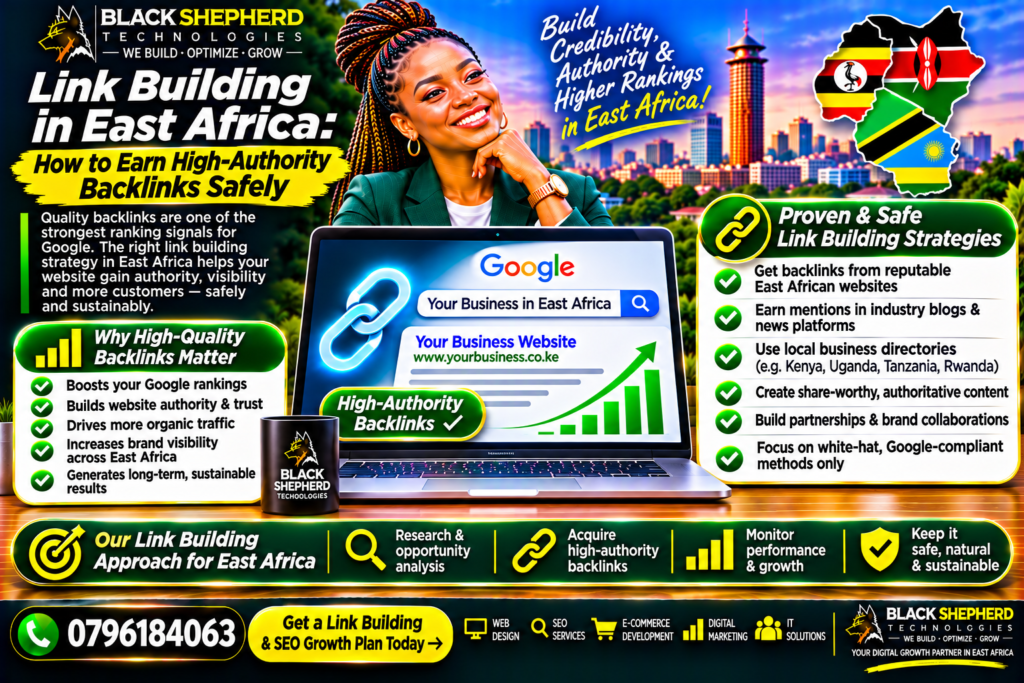
High-Value Local Links (High Impact): Feature articles on reputable Kenyan news portals, industry-specific directory inclusions, partner publications, higher education resource links, and regional business association profiles.
A single contextual backlink from a trusted regional news outlet or a respected corporate partner in East Africa provides more ranking value than 5,000 random links from foreign blogs. Sustainable backlink acquisition requires strategic digital PR, guest blogging, content assets, and industry collaborations.
Myth 7: Website Design Has Nothing to Do with SEO
The Lie: “Web design is just about aesthetics. SEO is about text and keywords. The two departments operate completely independently.”
It is common for businesses to treat web design and organic search strategy as isolated projects. A company hires a graphics designer to create a visual layout, and later hires an SEO specialist to “add search optimization” to the finished product.
The Reality
Web design and search engine optimization are inextricably linked. Visual design, user interface (UI), user experience (UX), technical architecture, and page speed form the foundation of technical SEO.
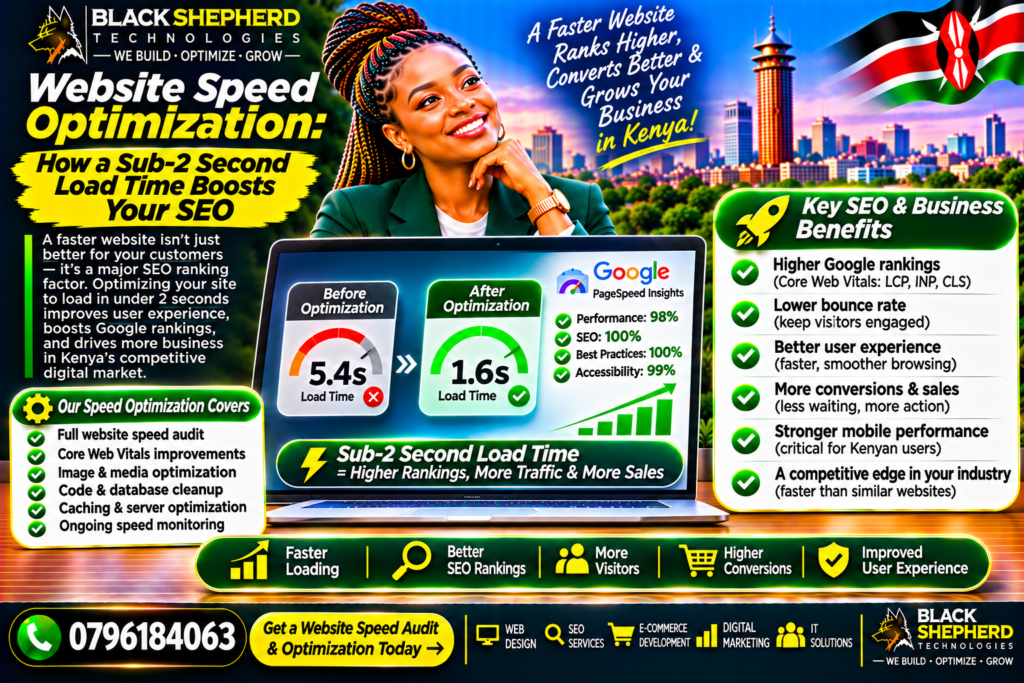
Google uses Core Web Vitals as official ranking signals. If your website looks great visually but takes 8 seconds to load on a mobile device, Google will suppress your rankings.
┌────────────────────────────────────────────────────────────────────────┐
│                   THE TECHNICAL SEO & DESIGN INTERSECTION              │
├────────────────────────────────────────────────────────────────────────┤
│                                                                        │
│                       ┌──────────────────────┐                         │
│                       │ Technical Web Design │                         │
│                       └──────────┬───────────┘                         │
│                                  │                                     │
│     ┌────────────────────────────┼────────────────────────────┐        │
│     ▼                            ▼                            ▼        │
│ ┌──────────────────────┐ ┌──────────────────────┐ ┌──────────────────┐ │
│ │ Core Web Vitals &    │ │ Mobile-First         │ │ Site Architecture│ │
│ │ Speed Performance    │ │ Responsiveness       │ │ & Rendering      │ │
│ └──────────────────────┘ └──────────────────────┘ └──────────────────┘ │
│                                                                        │
└────────────────────────────────────────────────────────────────────────┘
Critical Web Design Factors That Directly Impact SEO
1. Mobile-First Indexing
Over 85% of internet traffic in Kenya originates from mobile devices. Google exclusively evaluates and indexes the mobile version of your site. If your design features non-responsive elements, intrusive pop-ups, small text sizes, or broken navigation on smartphones, your search rankings will drop across all devices.
2. Page Loading Speed & Core Web Vitals
Kenyan consumers often access the web via variable mobile network speeds. If your design relies on uncompressed images, heavy scripts, or poorly coded software frameworks, load times will stall.
Key Speed Thresholds:
Largest Contentful Paint (LCP): Under 2.5 seconds
Interaction to Next Paint (INP): Under 200 milliseconds
Cumulative Layout Shift (CLS): Under 0.1
3. Site Architecture & Navigation
A clean website architecture allows search engines to crawl and index your pages easily. Clear internal linking patterns, intuitive drop-down menus, logical URL structures, and accessible breadcrumb trails ensure both search engine spiders and site visitors find relevant information quickly.
4. Conversion Rate Optimization (CRO)
Ranking #1 on Google is useless if your landing page fails to convert visitors into phone calls, inquiry forms, or sales. Strategic call-to-action (CTA) placements, clear headings, fast checkout processes, and trust signals turn organic traffic into bottom-line revenue.
The Ultimate 2026 Checklist for SEO Success in Kenya
To eliminate these myths and launch a successful organic strategy, follow this actionable SEO checklist tailored for the Kenyan market:
┌────────────────────────────────────────────────────────────────────────┐
│                     2026 KENYA SEO EXECUTION ROADMAP                   │
├────────────────────────────────────────────────────────────────────────┤
│                                                                        │
│  [PHASE 1: TECHNICAL FOUNDATION]                                       │
│   ├── Mobile-First Responsive Design Audit                             │
│   ├── SSL Certificate Installation (HTTPS)                             │
│   ├── XML Sitemap Submission to Google Search Console                  │
│   └── Page Speed Optimization (Under 2.5s Load Time)                   │
│                                                                        │
│  [PHASE 2: ON-PAGE & SEMANTIC CONTENT]                                 │
│   ├── In-Depth Local Keyword & Intent Research                         │
│   ├── Title Tag & Meta Description Optimization                        │
│   ├── Semantic Entity Integration & Comprehensive Writing              │
│   └── Structured Data (LocalBusiness Schema Markup)                    │
│                                                                        │
│  [PHASE 3: LOCAL PRESENCE & BRAND AUTHORITY]                           │
│   ├── Google Business Profile Setup & Verification                     │
│   ├── Consistent Local NAP Indexing Across Directories                  │
│   ├── High-Quality Regional Backlink Campaign                          │
│   └── Active Review Collection & Reputation Management                 │
│                                                                        │
└────────────────────────────────────────────────────────────────────────┘
Step 1: Fix Technical Foundations
-
Run a full audit using Google Search Console and Lighthouse.
-
Eliminate broken 404 links, fix improper 301 redirects, and remove duplicate content tags.
-
Ensure your web host offers fast response times within East Africa.
Step 2: Master Local Keyword Intent
-
Shift focus from short generic keywords to specific long-tail searches (e.g., target “commercial HVAC installation in Industrial Area Nairobi” instead of just “air conditioning”).
-
Create dedicated service and location pages for every major city or region you operate in across Kenya.
Step 3: Build Genuine Topical Authority
-
Create comprehensive, well-researched content hubs that answer real customer concerns.
-
Incorporate structured data (Schema Markup) for products, FAQs, local business details, and reviews.
Step 4: Secure High-Trust Local Backlinks
-
Partner with recognized Kenyan trade portals, business directories, news publications, and industry blogs.
-
Avoid link farms, automated software schemes, and low-quality guest post packages.
Frequently Asked Questions About SEO in Kenya
How long does it take to see real results from SEO in Kenya?
While Google Ads provide immediate traffic, legitimate organic search optimization typically shows initial traction within 3 to 6 months. Highly competitive niches may require 6 to 12 months of continuous effort to achieve top organic positions. However, once established, organic search rankings provide a compounding ROI without ongoing pay-per-click costs.
How much does professional SEO cost in Kenya?
SEO costs vary based on your business industry, competitive landscape, website age, and campaign scope. Beware of cheap “KES 5,000 per month” agencies—these operators often use automated spam tactics that can get your site penalized. Professional, high-ROI search campaigns represent a direct investment into custom web development, technical maintenance, content production, link acquisition, and ongoing optimization.
Can I do SEO for my business by myself?
Basic SEO tasks—such as updating business hours on Google Maps, publishing informative articles, and requesting customer reviews—can be done in-house. However, technical site audits, schema markup implementation, keyword mapping, conversion rate optimization, and competitive link-building require specialized digital marketing expertise, tools, and experience.
Conclusion: Stop Believing Myths and Build Sustainable Digital Equity
Believing SEO myths isn’t just a harmless mistake—it actively costs Kenyan businesses money, leads, and market position.
Treating SEO as a one-time project, stuffing keywords onto pages, relying exclusively on social channels, or buying cheap backlink packages wastes valuable resources and hurts your domain’s credibility.
Winning in the Kenyan digital ecosystem requires a modern, data-driven approach:
-
Build fast, responsive, mobile-first websites.
-
Publish authoritative content that solves actual user problems.
-
Build genuine local domain authority through trustworthy backlinks.
-
Optimize continuously for intent, technical performance, and conversion.
By abandoning outdated myths and embracing a modern search strategy, your website can become a 24/7 lead-generation engine that dominates search results across Kenya for years to come.