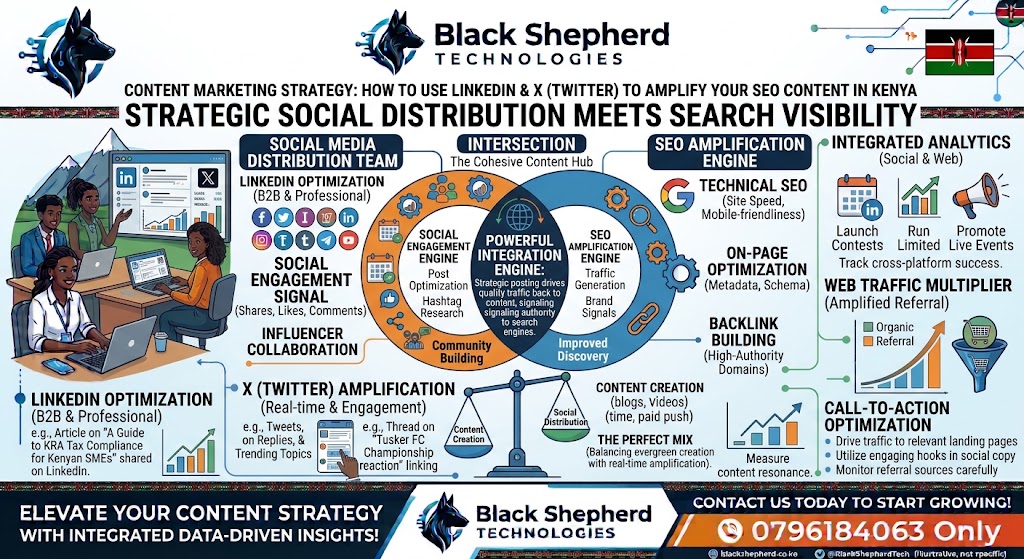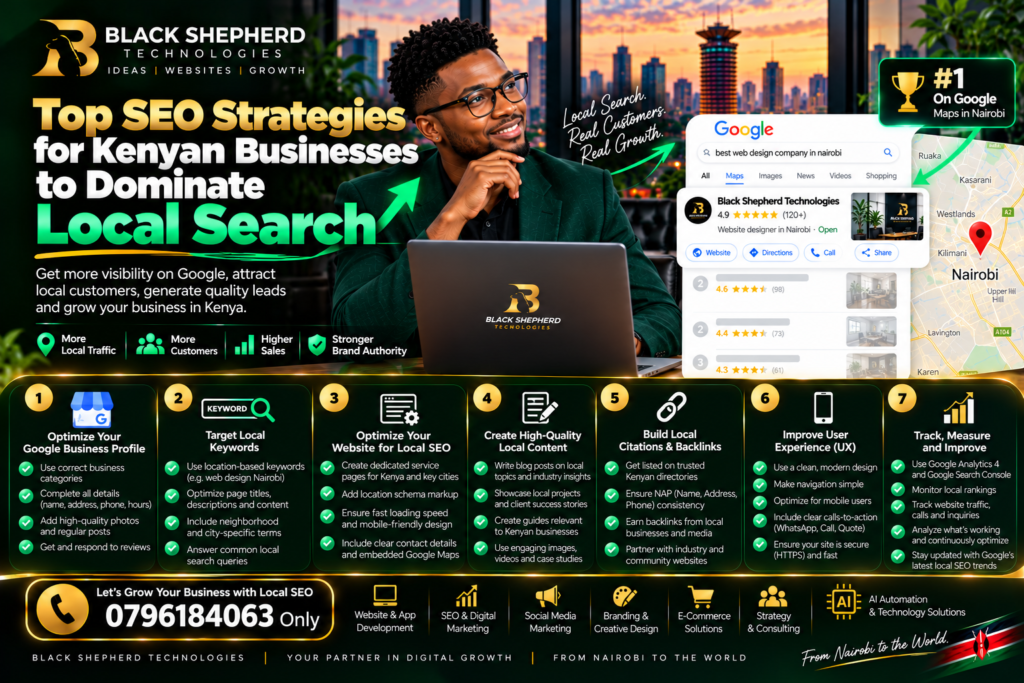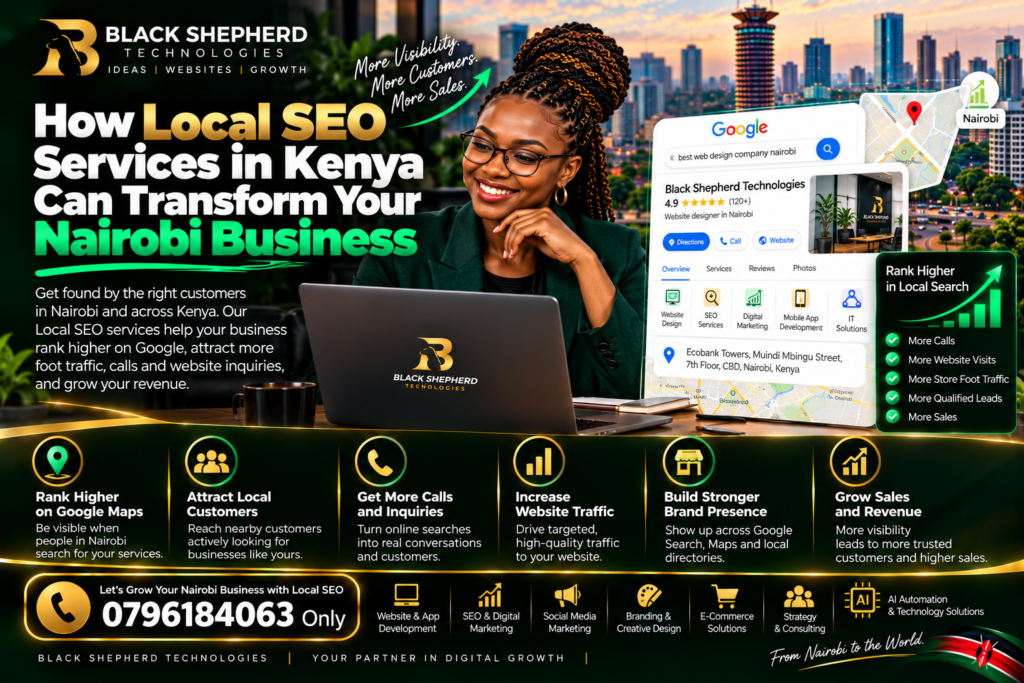
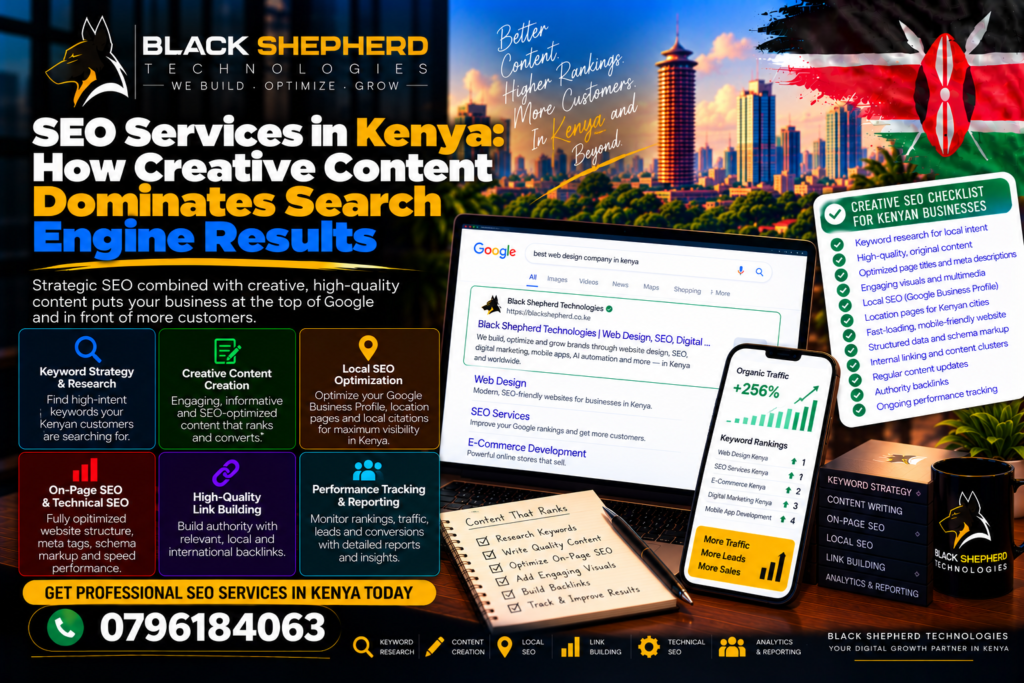
Exploring SEO Services in Kenya: How Creative Content Dominates Search Engine Results reveals a fundamental transformation in how digital visibility is achieved across East Africa’s most vibrant commercial hub. For years, search engine optimization (SEO) was dominated by mechanical tactics: stuffing web pages with repetitive keywords, building low-quality artificial backlinks, and treating content as a mere vehicle for search engine crawlers rather than a medium for human connection. In Nairobi, Mombasa, Kisumu, and beyond, this outdated approach no longer works. Modern search engines like Google have evolved sophisticated semantic intelligence powered by machine learning and natural language processing. Today, algorithms do not just scan for keywords; they measure user engagement, brand authority, visual polish, and emotional resonance.
Winning top-tier rankings on search engine results pages (SERPs) requires more than technical compliance. It demands a powerful synthesis of data-driven technical optimization and breathtaking creative storytelling. When businesses invest in comprehensive expert SEO services in Kenya, they unlock an integrated strategy where creative content acts as the ultimate magnet for traffic, trust, and conversion.
In this comprehensive guide, we will dissect how creative content dominates search engine results, why technical SEO and visual storytelling are inseparable, and how Kenyan enterprises can leverage advanced optimization frameworks to achieve sustainable digital dominance.
1. The Death of Keyword Stuffing: Understanding Modern Search Intent
To comprehend why creative content reigns supreme in modern search engine optimization, one must first understand how search algorithms evaluate quality.
The Shift Toward Semantic Search and User Intent
In the early days of search engines, ranking for a phrase like “best web designer in Nairobi” required repeating that exact phrase ten times in a 300-word blog post. Today, that tactic results in algorithmic penalties. Google’s core algorithms (such as BERT, MUM, and continuous core updates) evaluate search intent—the underlying goal or question the user is trying to address when typing a query.
-
Informational Intent: Users looking to learn or solve a problem (e.g., “how to optimize mobile checkout”).
-
Transactional Intent: Users ready to purchase a product or service (e.g., “hire top-tier SEO agency in Kenya”).
-
Navigational Intent: Users looking for a specific brand or physical location.
Why Creative Content Wins Intent-Driven Search
Creative content succeeds where robotic writing fails because it directly addresses the psychological nuances of human search intent. When content is crafted by skilled writers and creative directors, it incorporates natural synonyms, contextual idioms, emotional depth, and clear structural hierarchies.
-
Engagement Signals: When users land on a creatively written, visually engaging page, they stay longer, scroll deeper, and interact more frequently. Google measures these positive user engagement signals (such as dwell time and low bounce rates) as primary indicators of superior page quality, pushing the content higher up the SERPs.
2. The Anatomy of High-Ranking Creative Content
High-ranking content on competitive search engines is never accidental. It is engineered through a rigorous blend of creative storytelling, structural readability, and technical precision.
E-E-A-T: Experience, Expertise, Authoritativeness, and Trustworthiness
Google’s Search Quality Rater Guidelines emphasize E-E-A-T as a critical benchmark for ranking content, especially in competitive verticals like finance, health, and e-commerce. Creative content is the primary vehicle for demonstrating E-E-A-T:
-
Experience: Showcasing real-world case studies, proprietary data, localized examples, and authentic project portfolios.
-
Expertise: Writing with deep industry knowledge, avoiding fluff, and providing actionable, expert-level insights.
-
Authoritativeness: Establishing brand thought leadership through original research, expert commentary, and consistent publishing cadence.
-
Trustworthiness: Ensuring technical security, transparent sourcing, professional visual design, and clear contact information.
The Power of Multimedia Integration
Search engines do not read text in isolation; they evaluate the holistic page experience. Integrating creative visual assets—such as custom infographics, high-resolution product photography, embedded vertical videos, and interactive data visualizations—dramatically elevates page value. When users spend time interacting with rich media, search engines recognize the page as a comprehensive, high-utility resource.
3. The Symbiosis: Technical SEO Meets Visual Storytelling
A common friction point in digital agencies is the disconnect between the SEO team and the creative team. SEO specialists demand clean HTML, fast loading speeds, and specific keyword density, while creative designers push for heavy animations, immersive graphics, and striking visual layouts.
Bridging this gap is essential for dominating search results.
Optimizing Assets for Speed and Search Visibility
Heavy, unoptimized creative assets (such as massive uncompressed PNGs or unminified JavaScript animations) destroy page performance, causing sluggish Core Web Vitals scores that penalize search rankings.
-
Next-Gen Image Formats: Serving images in WebP or AVIF formats while maintaining pristine visual quality.
-
Semantic HTML and Accessibility: Wrapping creative layouts in clean, semantic HTML tags (
<article>,<section>,<header>,<h1>to<h6>) so search engine crawlers can easily parse the page structure while remaining fully accessible to screen readers.
For organizations seeking to scale their digital reach, partnering with specialists who understand both algorithmic optimization and brand aesthetics is crucial, ensuring that high-end web builds achieve top-tier Google rankings without sacrificing design integrity.
4. Real-World Execution: Showcasing Proof of Work and Local Authority
In the Kenyan market, trust is paramount. Local searchers want proof that a service provider or enterprise has successfully delivered results for businesses similar to theirs.
Leveraging Portfolios for SEO Authority
Search engines reward sites that demonstrate verifiable real-world track records. Building a structured, searchable project portfolio is a powerful technical and creative SEO strategy.
-
Keyword-Rich Case Studies: Writing detailed case studies that outline client challenges, strategic creative solutions, and measurable commercial outcomes using natural keyword variations.
-
Visual Verification: Embedding high-resolution imagery and live project links within portfolio entries. Reviewing a comprehensive diverse portfolio of digital projects demonstrates how technical execution and visual brand storytelling successfully intersect across various commercial ventures, reinforcing search authority and user conversion simultaneously.
5. Tailoring Search Strategies Across Diverse Market Sectors
SEO cannot operate under a one-size-fits-all model. A search strategy designed for an e-commerce retail store in Nairobi will fail miserably if applied to a B2B corporate SaaS platform or a coastal boutique hospitality brand.
Sector-Specific Content Optimization
-
Fintech & Banking: Focuses on trust-building content, security whitepapers, clear financial guides, and secure, lightning-fast interfaces.
-
E-Commerce & Retail: Prioritizes category-level keyword optimization, rich product schemas, fast-loading image galleries, and user review integration.
-
Corporate & Professional Services: Emphasizes thought-leadership blogs, localized service pages, and comprehensive case study archives.
Understanding how bespoke digital strategies are tailored to unique market requirements across various sectors is vital for stakeholders exploring specialized industries we serve, ensuring that content directly answers the specific intent of niche target audiences.
6. Measuring Success: Analytics, Conversions, and ROI
Dominating search engine results is not an ego metric; it is a financial investment designed to drive measurable business growth. To validate the ROI of creative content and SEO services, organizations must track advanced key performance indicators (KPIs) beyond basic traffic counts.
Key Metrics to Monitor
-
Organic Traffic Growth: Tracking the steady upward trajectory of unique visitors arriving via non-paid search results.
-
Keyword Ranking Velocity: Monitoring movement for high-intent primary and secondary target keywords across national and local SERPs.
-
Conversion Rate Optimization (CRO): Measuring how effectively organic search traffic converts into qualified leads, M-Pesa transactions, or newsletter sign-ups.
-
Dwell Time and Bounce Rate: Evaluating user engagement quality to ensure creative content is actively satisfying search intent.
Comparative Analysis: Traditional Keyword Stuffing vs. Creative-Driven SEO
To fully appreciate the paradigm shift in modern search optimization, examine the structural differences below:
Conclusion: Dominating Search Through Creative Excellence
SEO services in Kenya have moved far beyond technical checklists and robotic keyword placement. Today, dominating search engine results is an art form backed by rigorous engineering. By pairing creative content that captures human imagination with technical optimization that satisfies search engine algorithms, businesses can elevate their digital presence from obscurity to market leadership.
When your content educates, inspires, and converts, search engines reward you with the ultimate prize: sustained top-tier visibility and compounding commercial growth.