
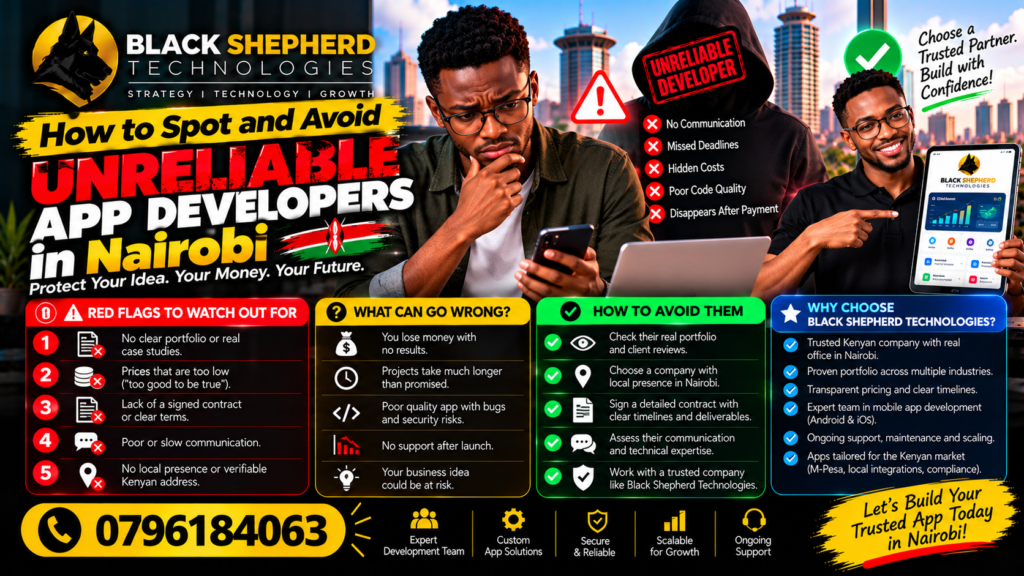
Nairobi’s tech ecosystem—affectionately and accurately dubbed the “Silicon Savannah”—is a powerhouse of digital innovation. From the bustling workspaces in Kilimani, Westlands, and Upper Hill to dynamic tech incubators across the city, brilliant minds are constantly engineering mobile applications that transform fintech, e-commerce, logistics, agriculture, and healthcare.
If you are a business owner, corporate executive, or startup founder looking to bring a mobile app to life, Nairobi offers access to immense talent. However, just as the market attracts world-class professional developers and agencies, it also harbors its share of unreliable freelancers, fly-by-night agencies, and incompetent vendors.
Hiring the wrong developer can turn your entrepreneurial dream into an expensive nightmare. Imagine sinking your hard-earned capital into a project, only to experience endless delays, ghosted communication, broken codebases, unoptimized interfaces, and missed app store launches.
How can you protect your investment? How do you separate seasoned professionals from amateur impostors?
This ultimate guide explores the warning signs of unreliable app developers in Nairobi, examines common pitfalls during the hiring process, and provides a foolproof framework for finding and vetting trustworthy digital partners.
Part 1: The Cost of Hiring the Wrong App Developer
Before diving into how to spot unreliable developers, it is vital to understand why making the wrong choice is so devastating. Mobile app development is not like building a static website or writing a simple document; it is an intricate, long-term engineering commitment.
When you partner with an unreliable developer, the damage extends far beyond lost money:
- Severe Project Delays: What was promised as a “six-week build” stretches into six months of excuses, broken builds, and missed deadlines, causing you to lose your market window to agile competitors.
- Insecure and Unmaintainable Code: Amateur developers often build applications using messy, un-architected “spaghetti code.” When you eventually try to scale or fix bugs, new developers will refuse to touch the codebase, forcing you to completely rewrite the app from scratch.
- IP and Source Code Hostage Situations: Unreliable vendors sometimes hold your source code, repository access, or developer account credentials hostage, demanding extra payments or cutting off communication entirely.
- Reputational Damage: Launching an app riddled with bugs, security vulnerabilities, and frequent crashes earns your brand immediate 1-star reviews on the Google Play Store and Apple App Store, permanently damaging consumer trust.
Part 2: Red Flags: How to Spot Unreliable App Developers
Spotting an unreliable developer early in the hiring process saves you months of frustration and thousands of shillings. Keep a sharp eye out for these definitive warning signs:
1. Suspiciously Low Pricing and Impossible Timelines
- The Red Flag: You approach three different agencies or freelancers with a complex e-commerce or fintech app idea requiring M-Pesa integration, user authentication, and an admin dashboard. Two professional agencies quote a realistic 4 to 6 months. A third developer promises to build the entire app in three weeks for a fraction of the cost.
- Why It’s Dangerous: Quality software engineering requires rigorous discovery, design, coding, testing, and deployment. Developers who slash prices drastically are either desperate, inexperienced, or planning to use generic, insecure pre-built templates scraped from the internet. You get what you pay for.
2. Vague Portfolios and Lack of Verifiable Live Apps
- The Red Flag: When you ask for examples of past work, the developer sends a few generic screenshots, unclickable design mockups, or claims their best work is “under a strict Non-Disclosure Agreement (NDA)” and cannot be shown. They cannot provide live links to apps currently active on the Google Play Store or Apple App Store.
- Why It’s Dangerous: Professional developers and reputable digital agencies in Nairobi are proud of their shipped products. They will readily share live app store links, client testimonials, and case studies detailing how they solved specific technical challenges.
3. Poor Technical Literacy and Buzzword Stuffing
- The Red Flag: During initial discussions, the developer agrees instantly to every single complex feature you suggest without asking clarifying questions about scalability, security, user load, or offline capabilities. They throw around buzzwords like “AI blockchain cloud super-apps” without explaining architectural realities.
- Why It’s Dangerous: Experienced developers act as trusted technical consultants. They will push back, ask tough questions about your business logic, and advise you against building unnecessary features that bloat your initial scope and budget.
4. Absence of a Formal Contract or Scope of Work
- The Red Flag: The developer is eager to start immediately upon receiving an informal M-Pesa or bank deposit, relying purely on verbal agreements or WhatsApp chat logs rather than a detailed, legally binding Service Level Agreement (SLA) and Scope of Work (SOW).
- Why It’s Dangerous: Without a clear contract outlining milestones, deliverables, timelines, ownership of intellectual property (IP), and payment terms, you have no legal recourse if the project goes sideways or if the developer abandons the work halfway through.
5. Communication Breakdown and Ghosting
- The Red Flag: During the vetting phase, the developer takes days to respond to simple messages, misses scheduled discovery calls, or gives vague, evasive answers when pressed for technical details.
- Why It’s Dangerous: Communication habits during vetting represent your best experience with that vendor. If they are unresponsive before you hire them, imagine how invisible they will become once they already have your deposit.
Part 3: Deep-Dive Questions to Vetting App Developers in Nairobi
When interviewing potential web designers, freelance developers, or digital agencies in Nairobi, do not rely on charm. Ask targeted, probing technical and business questions to test their competence:
- “Can you walk me through your standard development lifecycle (SDLC)?”
- What to listen for: A structured answer covering discovery, UI/UX prototyping, frontend/backend engineering, QA testing, and app store deployment. If they say, “We just start coding,” run away.
- “How do you handle local API integrations like M-Pesa (Daraja API) and payment gateways?”
- What to listen for: Practical knowledge of sandbox environments, callback URLs, timeout handling, and transaction security. Anyone experienced in the Kenyan market will discuss this effortlessly.
- “Where is your team located, and will work be outsourced offshore?”
- What to listen for: Transparency. Some agencies pitch themselves as local Nairobi firms while secretly outsourcing all coding to anonymous overseas low-cost contractors, destroying communication channels.
- “What happens after the app is launched? Do you offer maintenance SLAs?”
- What to listen for: A clear post-launch support plan covering bug fixes, OS update compatibility, crash monitoring (e.g., Firebase Crashlytics), and security patches.
Part 4: How to Protect Yourself and Ensure Project Success
Vetting developers is only half the battle. You must also implement proper operational safeguards to ensure accountability throughout your project lifecycle.
1. Insist on Milestone-Based Payments
Never pay 100% of the project fee upfront. Structure your payment terms into clear, deliverable-based milestones tied to verifiable outcomes:
- Milestone 1: Discovery document and UI/UX design prototype sign-off (e.g., 25%).
- Milestone 2: Backend infrastructure and core API completion (e.g., 25%).
- Milestone 3: Beta release and successful internal testing (e.g., 25%).
- Milestone 4: Final app store publication and handover of source code repository access (e.g., 25%).
2. Demand Ownership of Your Developer Accounts and Repositories
Ensure that your company owns its Google Play Console and Apple App Store developer accounts. Never let a freelancer publish your app under their personal developer account. Furthermore, insist on direct access to your code repository (such as GitHub or GitLab) from day one so that your intellectual property remains yours.
3. Partner with Established Digital Agencies
While talented individual freelancers exist, partnering with an established digital agency or web design and development firm in Nairobi offers a major structural advantage. Agencies provide cross-functional stability—if your lead developer falls sick or leaves the firm, the agency has other engineers ready to step in without missing a beat.
Conclusion
Navigating the tech talent pool in Nairobi is an exciting journey, but it requires vigilance. By watching out for suspicious pricing, demanding verifiable portfolios, enforcing formal contracts, and structuring milestone payments, you can easily filter out unreliable developers and secure a trustworthy partner.
Whether you are launching a fintech disrupter, an e-commerce platform, or an enterprise mobile tool, investing time in careful vetting guarantees your application is built securely, scales gracefully, and thrives in the dynamic Kenyan digital ecosystem.
Looking to build, scale, or rescue a mobile app project with a trusted team? Connect with professional digital agencies, web designers, and mobile app experts in Nairobi to bring your vision to life safely and professionally.
