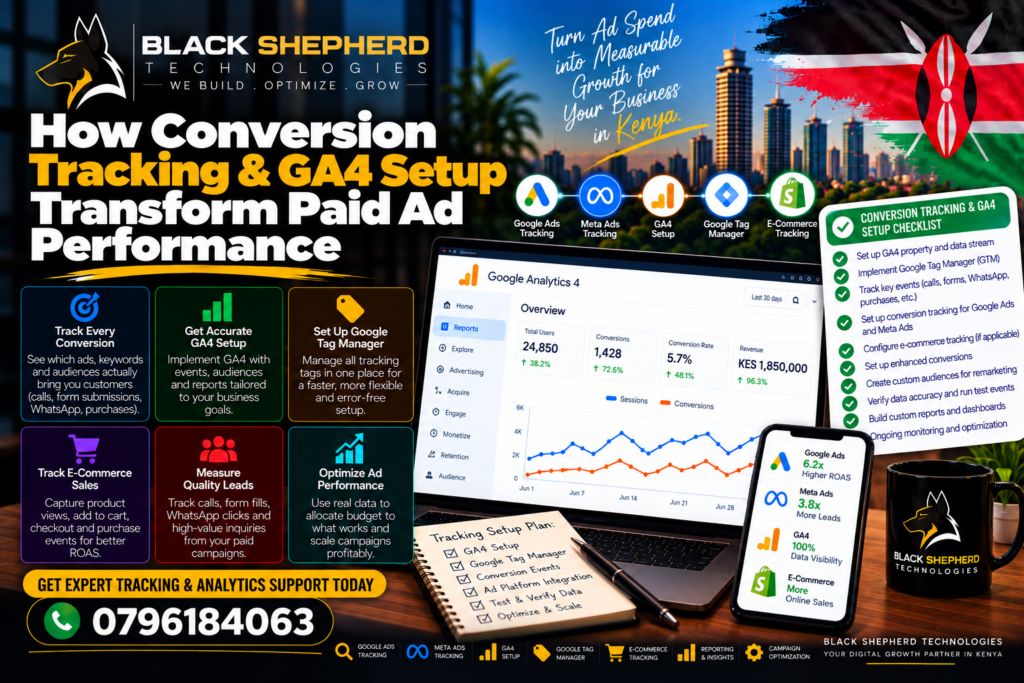
While persuasive ad copy and eye-catching creatives attract clicks, conversion tracking and Google Analytics 4 (GA4) infrastructure serve as the central nervous system of your paid advertising campaigns. In modern digital advertising, bidding algorithms are entirely signal-driven. If your account feeds inaccurate, duplicate, or unverified conversion data to ad platforms like Google Ads, Meta, and TikTok, machine-learning models will optimize for the wrong user interactions, causing your advertising costs to rise.
Setting up robust conversion tracking and configuring GA4 bridges the gap between ad spend and actual sales revenue. This framework explains how proper data setups transform performance and details the technical steps needed to optimize your tracking infrastructure.
1. How Accurate Tracking Powerfully Impacts Paid Ad Performance
Data Optimization Pipeline
 [ Accurate Conversion Signal ] ──► [ Machine Learning / Smart Bidding ] ──► [ Higher ROI & Lower CPA ]
                                                   │
 [ Misconfigured / Spam Events ] ──► [ Algorithmic Budget Misallocation ] ──► [ Inflated Ad Costs ]
A. Feeding Smart Bidding & Machine Learning Engines
Modern ad platforms rely on AI-driven automated bidding (e.g., Google’s Target CPA/Target ROAS or Meta’s Advantage+ budget optimization). These algorithms analyze thousands of contextual signals (user intent, device, time of day, browsing history) to place real-time bids.
-
Without Conversion Signals: Algorithms bid blindly based on cheap clicks, bringing low-intent users to your site.
-
With Precise Conversion Signals: Algorithms automatically target users with profiles similar to those who previously converted, driving down your Cost Per Acquisition (CPA) and increasing your Return on Ad Spend (ROAS).
B. Eliminating “Invisible” Campaign Waste
Without server-side tracking and GA4 integration, up to 30%–40% of conversion touchpoints remain invisible due to browser privacy updates, iOS restrictions, and ad-blockers. Upgrading your tracking infrastructure recovers these lost signals, providing ad engines with complete data to evaluate channel performance accurately.
C. Unlocking Multi-Touch Attribution Insights
Single-platform dashboards present isolated reports. GA4 serves as an impartial analytics hub that consolidates the entire buyer journey. It reveals how top-of-funnel channels (e.g., TikTok or Meta brand ads) interact with bottom-of-funnel channels (e.g., Google Search or direct traffic), preventing marketers from prematurely cutting awareness campaigns that quietly drive sales.
2. Navigating Modern Terminology: GA4 “Key Events” vs. Google Ads “Conversions”
Google unified its analytics and advertising terminology to improve reporting clarity across platforms:
Data Flow Hierarchy
 [ User Interaction ] ──► [ GA4 Event ] ──► [ Marked as GA4 "Key Event" ] ──► [ Imported as Google Ads "Conversion" ]
-
GA4 Events: Any raw interaction on your website (e.g.,
page_view,scroll,click,file_download). -
GA4 “Key Events”: Specific events within GA4 that represent critical business milestones (e.g.,
generate_lead,add_to_cart,sign_up). They measure cross-channel behavior across all traffic sources (organic, direct, paid, social). -
Google Ads “Conversions”: Key events explicitly imported into or defined within Google Ads to train automated Smart Bidding strategies.
3. Best Practices for GA4 and Conversion Architecture
Deploying GA4 alongside paid ad accounts requires following a structured implementation workflow:
Conversion Setup Checklist
 ├── 1. Goal Classification: Set 1–3 Primary Actions; keep micro-interactions Secondary
 ├── 2. Centralized Deployment: Fire tags cleanly using Google Tag Manager (GTM)
 ├── 3. First-Party Signal Boosting: Enable Enhanced Conversions & Server-Side CAPI
 └── 4. Attribution Alignment: Utilize Data-Driven Attribution (DDA) models
A. Maintain a Strict Distinction Between Primary and Secondary Actions
A common setup error is marking every minor user interaction as a primary conversion.
-
Primary Conversions (Bidding Signals): Reserve these exclusively for high-intent, revenue-generating outcomes (e.g., completed purchases, validated lead forms, confirmed phone calls). Smart Bidding optimizes using only primary conversions.
-
Secondary Conversions (Diagnostic Signals): Assign micro-engagements (e.g., newsletter signups, PDF downloads, pricing page views) as secondary. They remain visible in diagnostic reports without polluting automated bidding models.
B. Deploy Native Conversion Tags Alongside GA4 Imports
For primary conversion actions in Google Ads, best practice dictates firing direct Google Ads Conversion Tags via Google Tag Manager (GTM) rather than relying solely on imported GA4 Key Events. Direct native tags process in real time without analytics processing delays, ensuring automated bidding models adjust instantly. Use GA4 Key Events primarily for cross-channel diagnostic reporting.
C. Enable Enhanced Conversions & Conversions API (CAPI)
First-party data matching is essential for modern conversion tracking.
-
Enhanced Conversions for Web: Securely passes hashed user data (emails, phone numbers, names) collected from checkout or lead forms directly to ad networks. This restores privacy-restricted attribution signals and improves customer match capabilities.
-
Server-Side Tracking (CAPI): Mirrors client-side browser tags with server-to-server data pipelines. This bypasses client-side ad-blockers and network drops, stabilizing event volume reporting.
D. Use Data-Driven Attribution (DDA)
Replace single-touch attribution models (such as Last-Click) with Data-Driven Attribution. DDA uses machine learning to evaluate historical user touchpoints, distributing fractional credit to every campaign, keyword, and creative that contributed to the final conversion.
4. Key GA4 Reports Every Paid Media Specialist Must Use
Once GA4 is configured, use these tailored exploration reports to guide campaign management decisions:
5. Technical Validation & Troubleshooting Checklist
Before launching high-budget ad campaigns, complete this verification checklist:
Final Thoughts
Conversion tracking and GA4 configuration are strategic assets that directly drive paid ad profitability. By defining clear primary conversion goals, implementing native tags with Enhanced Conversions, leveraging server-side CAPI pipelines, and evaluating performance through GA4 attribution reports, you supply ad network algorithms with clean data. This continuous feedback loop eliminates wasted budget and powers scalable, high-ROI client acquisition.