The digital and commercial ecosystem across Kenya has achieved an extraordinary level of transactional maturity. From the towering financial and technology towers of Nairobi’s Upper Hill and Westlands to the bustling retail corridors of the Central Business District (CBD), the coastal tourism hub of Mombasa, the rapid urban expansion of Nakuru, and the vibrant trading networks of Eldoret, businesses are shifting online faster than ever before.
For online retailers, startup founders, and enterprise directors, launching an e-commerce website is no longer just about presenting a visually appealing product catalog. The absolute lifeblood of any online store is its payment gateway. In East Africa’s dominant mobile-first economy, if your checkout page fails to provide a seamless, instant mobile money payment experience, your prospective customers will abandon their shopping carts within seconds.
For years, many Kenyan websites relied on clumsy, manual payment workarounds—such as instructing users to manually dial a Paybill number, input an account number, complete a transaction on their phone, and then type a manual M-Pesa confirmation code back into a website form.
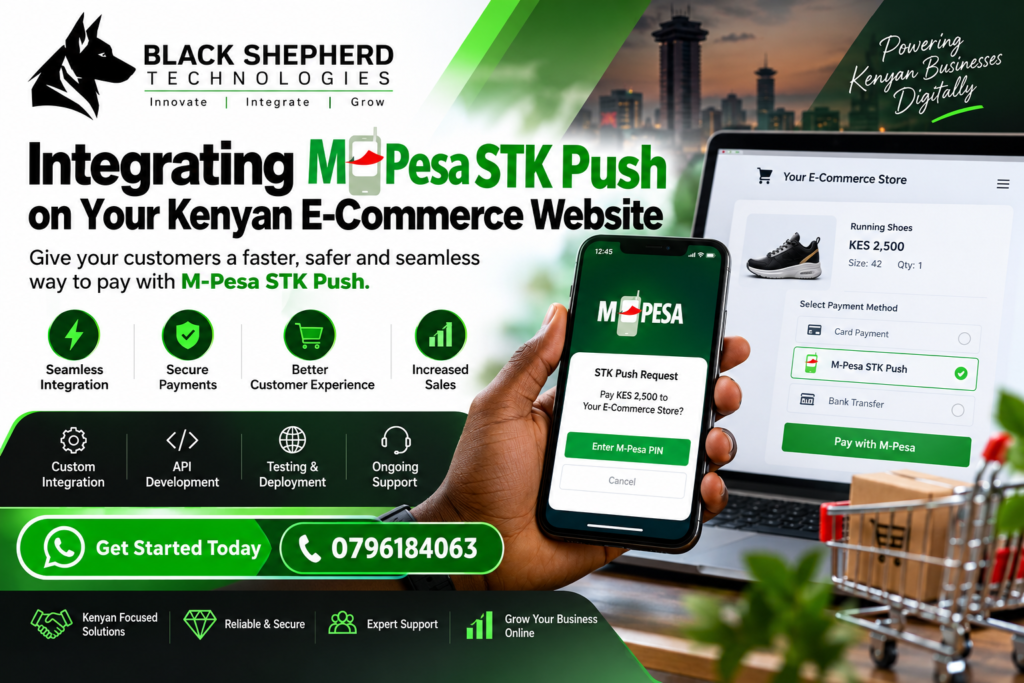
This manual friction is a conversion killer. Today, high-performing online stores utilize M-Pesa STK Push (also known as Lipa na M-Pesa Online API). With a single click on a website checkout button, an automated payment prompt pops up directly on the buyer’s smartphone screen, prompting them to enter their M-Pesa PIN and complete the purchase instantly.
Understanding how M-Pesa STK push integration works, why it transforms e-commerce conversion rates, and how to implement it securely is vital for commercial success. Partnering with technical experts who deliver comprehensive SEO Services in Kenya ensures that your transactional website is engineered from inception to attract high-intent traffic, build unshakeable buyer trust, and maximize online sales.
1. The Evolution of Payments: Why Manual Paybills Destroy E-Commerce ROI
To understand the transformative impact of M-Pesa STK Push, we must first analyze the severe commercial limitations of legacy manual payment models.
+-------------------------------------------------------------+
| MANUAL PAYBILL VS. AUTOMATED STK PUSH CHECKOUT              |
|                                                             |
| 1. MANUAL PAYBILL WORKFLOW (High Friction)                  |
|    - User views cart -> Leaves site to dial USSD / Paybill  |
|    - Copies long transaction code -> Pastes into website form|
|    - Result: 70%+ Cart Abandonment Rate                     |
|                                                             |
| 2. AUTOMATED M-PESA STK PUSH (Instant Conversion)          |
|    - User enters phone number -> Taps "Pay via M-Pesa"      |
|    - Automated prompt appears on phone -> Enters PIN -> Done |
|    - Result: Streamlined Checkout & Maximum Sales Conversion |
+-------------------------------------------------------------+
When an online store forces a customer through manual Paybill workflows:
- Cognitive Load and Interruptions: The shopper must leave the checkout screen, switch apps or dial USSD codes (
*334#), remember business numbers, type account numbers, and copy-paste alpha-numeric transaction confirmation codes. - Human Error: Shoppers frequently mistype transaction codes, enter incorrect amounts, or abandon the process halfway through frustration.
- Catastrophic Cart Abandonment: Studies show that manual payment processes drive cart abandonment rates above 75%. You spend valuable capital on marketing and advertising to bring traffic to your store, only to lose them at the final checkout hurdle.
At Black Shepherd Technologies, our development workflows span professional corporate builds and advanced transactional e-commerce platforms. Reviewing our successful digital implementations across diverse sectors via our comprehensive portfolio and projects archive illustrates how seamless payment engineering translates into measurable commercial growth.
2. What Is M-Pesa STK Push and How Does It Work?
M-Pesa STK (SIM Toolkit) Push is an advanced API integration provided by Safaricom (via the Daraja Developer Portal) that connects your website’s backend directly to the subscriber’s mobile phone network.
When a customer initiates checkout on your e-commerce website:
- Phone Number Entry: The customer enters their Safaricom mobile number at your website’s secure checkout page.
- API Request Trigger: Your website’s backend server sends an authenticated API request to the Safaricom Daraja server containing the merchant credentials, transaction amount, customer phone number, and a unique reference code.
- Instant Smartphone Prompt: Safaricom’s system instantly triggers a secure push notification directly to the customer’s phone screen, displaying the business name, exact amount in Kenyan Shillings (KES), and an input field for their M-Pesa PIN.
- Instant Callback Confirmation: Once the customer enters their PIN, Safaricom processes the transaction, sends an instant confirmation SMS to the user, and sends a secure programmatic callback response to your website. Your website updates order status to “Paid” and initiates fulfillment instantly without manual intervention.
Different commercial sectors experience unique transactional and operational demands. Exploring the specialized industries we serve demonstrates how tailored digital frameworks align M-Pesa payment workflows with sector-specific operational expectations.
3. The 4 Major Business Benefits of Integrating STK Push
Implementing automated M-Pesa STK push checkouts on your Kenyan e-commerce website delivers immediate, compounding commercial advantages:
1. Dramatic Reduction in Cart Abandonment
By eliminating manual data entry, copy-pasting codes, and USSD navigation, STK push reduces checkout friction to a single tap. This streamlined user experience increases successful checkout completion rates by up to 60%.
2. Instant Order Verification and Fulfillment
Manual Paybill payments require staff members to log into bank dashboards or check SMS notifications to verify whether a customer’s payment has cleared before dispatching goods. STK push automates this entirely. Orders are confirmed programmatically within milliseconds, allowing automated inventory deduction and instant dispatch workflows.
3. Elimination of Fraud and Human Error
Because transaction references, phone numbers, and amounts are handled programmatically via encrypted API calls, the risk of human error (such as fake confirmation messages or mismatched transaction codes) is entirely eliminated.
4. Elevated Brand Credibility and Trust
When a customer experiences a slick, professional, instantaneous mobile money checkout process that mirrors elite applications, their trust in your brand skyrockets, encouraging repeat purchases and long-term customer loyalty.
4. Technical Implementation Overview: How Developers Set It Up
Integrating M-Pesa STK Push requires professional backend development expertise. While various third-party aggregators (such as Intasend, Pesapal, or Paystack) offer pre-built plugins, many high-volume e-commerce stores prefer direct Safaricom Daraja API integration to minimize transaction fee overheads and maintain complete system control.
Core Technical Steps Required:
- Developer Account Registration: Register on the Safaricom Daraja Developer Portal and create a production app to obtain your consumer key, consumer secret, and passkey.
- Access Token Generation: Your website’s backend code must securely request an OAuth authorization access token from Safaricom using your app credentials.
- STK Push Request Construction: Build a secure POST request to the Safaricom
processrequestendpoint, formatting the timestamp, password (base64 encoded combination of shortcode, passkey, and timestamp), transaction type (CustomerPayBillOnline), amount, party numbers, and callback URL. - Callback URL Handler: Program a secure server-side listener script (endpoint) on your website to receive JSON response data from Safaricom when the user completes or cancels the transaction, updating your database order table accordingly.
5. Security and Compliance Best Practices
Handling financial transactions online demands rigorous security hardening to protect your business and customer data:
- Enforce HTTPS Encryption: Your e-commerce store must operate exclusively on secure HTTPS connections backed by a valid SSL certificate. Insecure HTTP sites cannot process secure API callbacks safely.
- Secure Environment Variables: Never hardcode your Safaricom consumer secret or API passkeys into public theme files. Store sensitive API credentials securely in server-side environment variables (
.env). - Rigorous Sandbox Testing: Always test your STK push integration thoroughly in Safaricom’s Sandbox environment using test numbers before deploying to live production servers.
Conclusion and Next Steps
Integrating M-Pesa STK Push on your Kenyan e-commerce website is no longer an advanced luxury feature; it is an absolute commercial necessity. Eliminating manual checkout friction, preventing cart abandonment, and automating order fulfillment transforms your online store into a high-converting sales engine.
Ready to integrate seamless M-Pesa checkouts, outrank your competitors, and scale your e-commerce revenue across Kenya? Partner with technical specialists who understand the Kenyan digital landscape. Explore our proven methodologies, review our past success stories, and discover how tailored digital solutions can elevate your enterprise. Take the first step toward sustained commercial growth by visiting Black Shepherd Technologies today.