When executed correctly, digital advertising across Google, Meta, TikTok, and LinkedIn is a powerful engine for predictable business growth. However, for many companies, running paid ads feels like an expensive experiment that drains capital without producing pipeline returns.
When ad budgets evaporate without generating profitable conversions, the root cause is rarely the platform itself. Instead, it stems from systemic, avoidable execution mistakes.
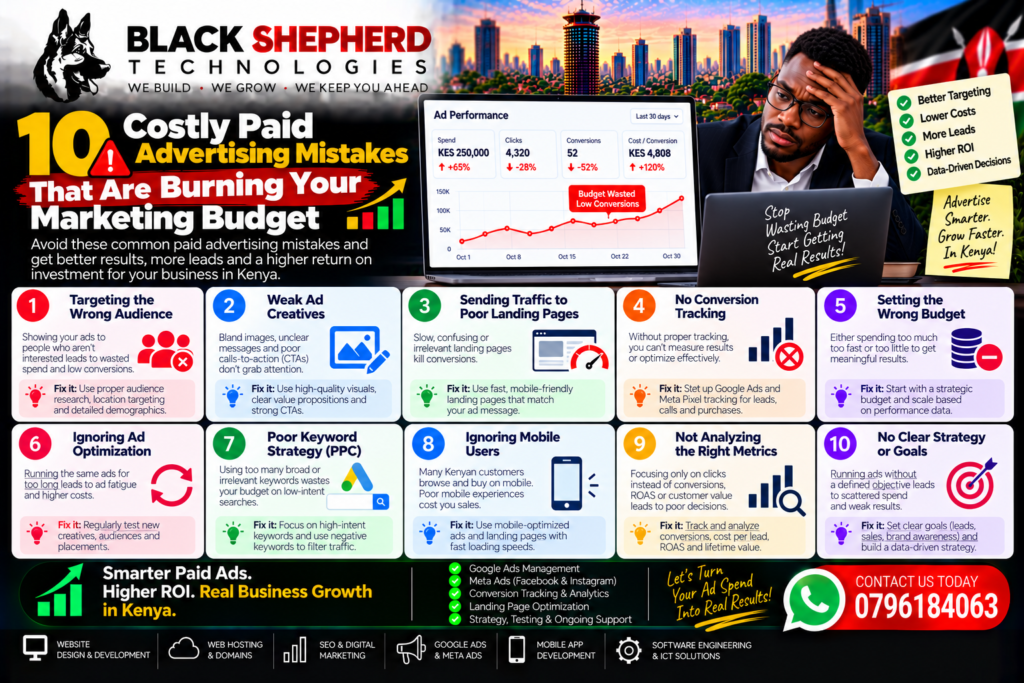
Below are the 10 most costly paid advertising mistakes that burn marketing budgets, along with actionable frameworks to fix them.
1. Optimizing Campaigns for Clicks Instead of Business Conversions
A frequent structural error is choosing ad campaign objectives that incentivize algorithms to deliver cheap, low-value user traffic instead of real revenue.
-
The Mistake: Setting campaign goals to Traffic, Link Clicks, or Brand Awareness. This tells platforms like Meta or Google to find users who click links out of curiosity or by accident, rather than users who make purchases or submit leads.
-
The Financial Impact: High traffic volumes, massive bounce rates (80%+), and zero pipeline growth.
-
The Fix: Always set your primary campaign objective to Conversions, Leads, or Sales. Ensure the algorithm is guided by actual revenue events rather than vanity metrics.
2. Operating with Broken or Unvalidated Conversion Tracking
An ad algorithm is only as intelligent as the data feedback loop you feed into it. If tracking tags are misconfigured, your ad platforms operate blind.
-
The Mistake: Relying solely on basic, client-side browser pixels that get blocked by iOS privacy updates, ad-blockers, or browser cookie restrictions, leading to under-reported or falsely duplicated conversions.
-
The Financial Impact: The ad engine starves winning ad sets of impressions or optimizes toward false success signals, wasting thousands on non-converting audience segments.
-
The Fix: Deploy server-side tracking (e.g., Meta Conversions API [CAPI] and Google Tag Manager Server-Side Tagging) to route verified conversion events directly from your host server to ad networks.
3. Ignoring Negative Keywords in Google Search Ads
Google Search Ads capture high-intent users, but running broad match keywords without aggressive negative keyword management drains budgets quickly.
-
The Mistake: Allowing broad match keyword phrases to trigger your ads on irrelevant, low-intent search queries like “free templates,” “jobs hiring,” or “course PDF tutorials.”
-
The Financial Impact: 20% to 40% of daily ad spend consumed by job seekers, students, and DIY searchers who have zero commercial intent.
-
The Fix: Audit your Search Terms Report weekly and maintain account-level negative keyword lists to systematically block non-buyer search queries.
4. Sending Paid Traffic to a Generic Homepage
Directing ad clicks straight to a busy corporate homepage instead of a tailored landing page burns ad budgets fast.
-
The Mistake: Forcing ad traffic onto a homepage full of header navigation menus, company announcements, team bios, and competing calls-to-action.
-
The Financial Impact: Users face high cognitive load, fail to find the exact offer mentioned in the ad, and bounce within seconds.
-
The Fix: Build dedicated, fast-loading landing pages for every active campaign. Ensure absolute message match between the ad copy headline and the landing page’s primary value proposition.
5. Falling Victim to Creative Fatigue and Ad Overlap
Running identical ad creatives to the same audience for months causes performance to degrade rapidly.
-
The Mistake: Failing to monitor ad frequency metrics while running overlapping audience segments across multiple campaigns without exclusions.
-
The Financial Impact: Users suffer from ad fatigue, click-through rates (CTR) plummet, cost-per-click (CPC) spikes, and competing campaigns bid against each other in the auction.
-
The Fix: Track ad frequency closely. Establish a systematic creative testing pipeline to rotate new visual hooks, video angles, and copy variations every 2 to 4 weeks.
6. Over-Segmenting or Relying on Unfiltered Broad Targeting
Targeting everyone means appealing to no one, but hyper-segmenting small audiences restricts scale and drives up costs.
-
The Mistake: Stacking dozens of narrow interest tags or setting geographic targeting radiuses too small, or running unoptimized broad campaigns without strong creative hooks.
-
The Financial Impact: Artificially inflated CPMs, rapid audience exhaustion, or wasted impressions served to irrelevant demographic profiles.
-
The Fix: Let creative ad copy and visual hooks qualify viewers. Use first-party customer lists to build 1% to 3% Lookalike Audiences, and segment campaigns across the marketing funnel.
7. Prematurely Adopting Restrictive Smart Bidding Strategies
Automated Smart Bidding tools are powerful, but applying them before an account has gathered sufficient conversion data will stall performance.
-
The Mistake: Launching a brand-new campaign with a restrictive Target ROAS or Target CPA before the account has logged baseline conversions.
-
The Financial Impact: The platform severely restricts ad delivery, starves the campaign of impressions, or over-bids on limited inventory.
-
The Fix: Launch new campaigns using Maximize Conversions or Enhanced CPC to gather initial event data, and introduce Target CPA or ROAS constraints only after reaching 30–50 conversions per month.
8. Pitching High-Friction Offers to Cold Audiences
Expecting cold traffic to immediately commit to major purchases or long sales calls breaks conversion funnels.
-
The Mistake: Running top-of-funnel ads that demand immediate high commitment (e.g., “Buy Our Premium Package Now” or “Book a 60-Minute Paid Consultation”).
-
The Financial Impact: Near-zero conversion rates because cold audiences do not yet know, trust, or value your brand.
-
The Fix: Reduce friction for cold traffic by offering low-commitment, high-value assets first—such as free cost estimators, pricing calculators, downloadable strategy guides, or introductory product bundles.
9. Friction-Heavy User Experience and Checkout Flows
Winning an ad click is only half the battle; if your mobile user interface is slow or confusing, visitors will drop off before buying.
-
The Mistake: Operating slow-loading pages, long multi-field lead forms (10+ fields), or missing local payment gateways.
-
The Financial Impact: High mobile abandonment rates, especially in regional markets where missing instant mobile payments (like M-Pesa STK Push) kills e-commerce conversions.
-
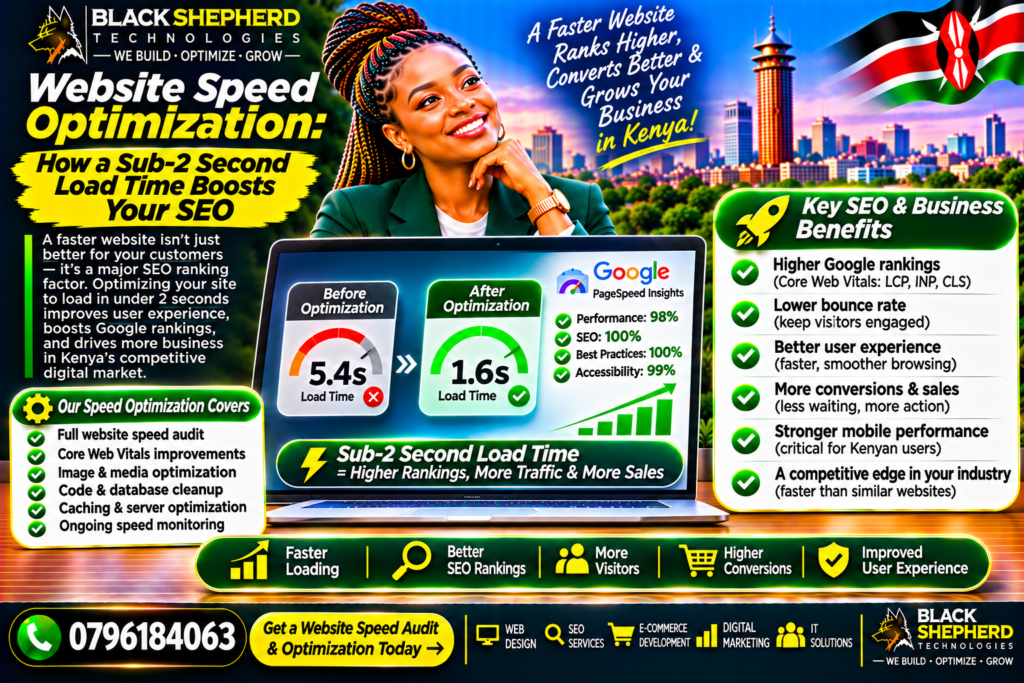
The Fix: Keep lead capture forms minimal (under 4 fields), optimize page load speeds under 2 seconds, and integrate seamless localized payment options.
10. Failing to Nurture and Retarget Unconverted Traffic
Treating paid advertising as a one-step purchase funnel leaves 95% to 98% of your traffic value on the table.
-
The Mistake: Stopping all marketing efforts the moment a cold visitor leaves your website without converting.
-
The Financial Impact: Inflated customer acquisition costs (CAC) because you rely entirely on cold traffic while competitors capture prospects who needed multiple touchpoints.
-
The Fix: Implement multi-stage retargeting sequences across social and display networks, combined with automated email, SMS, or WhatsApp follow-ups triggered within minutes of lead capture.
Ready to Eliminate Wasted Ad Spend?
At Black Shepherd Technologies, we audit active ad accounts, eliminate budget leaks, and engineer high-ROI performance marketing campaigns backed by advanced tracking and dedicated landing page funnels.
Explore how we can maximize your return on ad spend at blackshepherd.co.ke.