PWA Development Kenya (Progressive Web App)

-
Delivery Time2 Weeks
-
English levelProfessional
-
LocationUSA, United Kingdom, United Arab Emirates, New York, Nairobi, Kilimani, Kenya, Dubai, CBD Nairobi, Canada, Australia
Service Description
The cost of PWA Development (Progressive Web App) in Kenya is 800000KES .Get PWA Development (Progressive Web App) in Kenya at a price of 600000KES at Black Shepherd Technologies.
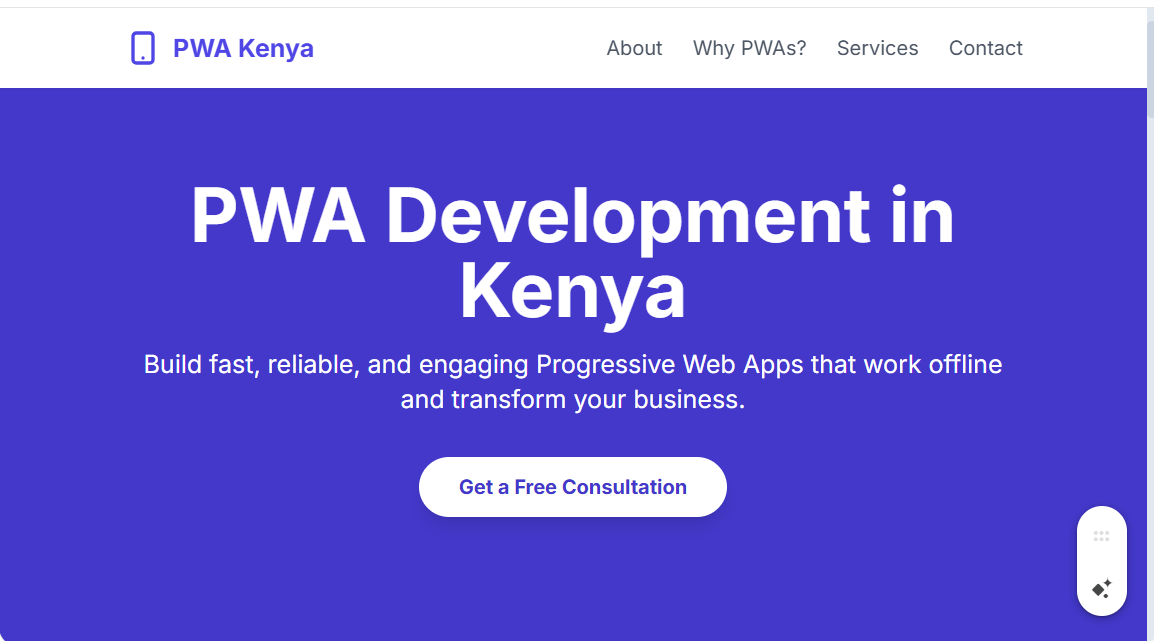
Looking for PWA development in Kenya? We build high-performance, app-like websites that work offline, engage users, and deliver exceptional speed. Elevate your Kenyan business with a Progressive Web App today
In the dynamic digital landscape of Kenya, businesses are constantly seeking innovative ways to connect with their customers and deliver seamless online experiences. One of the most powerful and transformative solutions emerging is the Progressive Web App (PWA). A PWA is not just another website; it’s a new standard for web development that combines the best of the web and native mobile apps, offering a faster, more reliable, and more engaging user experience.
beyond the user-facing benefits, the power of a PWA lies in its technical architecture. Understanding these core components provides a deeper appreciation for their effectiveness:
Service Workers: This is the heart of a PWA. A service worker is a script that the browser runs in the background, separate from the webpage. It acts as a programmable proxy, intercepting network requests. This enables features like offline caching, which is what allows a PWA to function without an internet connection. It also manages push notifications and background synchronization, ensuring data is updated efficiently.
Web App Manifest: This is a JSON file that provides metadata about the PWA. It defines the app’s name, start URL, icons, and display settings. This file is what allows a user to “install” the PWA to their home screen, giving it a native app-like presence. It also dictates how the app should be displayed, for example, in a full-screen, standalone mode without a browser’s address bar.
HTTPS: A secure connection is a non-negotiable requirement for PWAs. All PWA features, especially service workers, must be served over HTTPS. This ensures data integrity and security, protecting both the business and the user from man-in-the-middle attacks and other cyber threats.
Expanding on the Business Impact for Kenya
The initial points about offline functionality and low data consumption are highly relevant. Let’s delve deeper into their practical implications for Kenyan businesses.
Improved SEO and Discoverability: Unlike native apps which are confined to app stores, PWAs are websites at their core. This means they are indexed by search engines like Google. A well-optimized PWA can rank highly in search results, driving organic traffic and making your business more discoverable to potential customers who are not actively searching in an app store.
Higher User Engagement and Retention: The ability to send push notifications is a powerful tool for re-engagement. For a Kenyan e-commerce business, this means they can instantly notify users of flash sales or new products. For a news outlet, they can send breaking news alerts. This direct communication channel helps keep the brand top-of-mind and encourages repeat visits without the need for costly marketing campaigns.
Cost-Effectiveness and Faster Time-to-Market: Developing a single PWA is significantly more cost-effective and faster than building separate native apps for both Android and iOS. This is a major advantage for small and medium-sized enterprises (SMEs) in Kenya who may have limited budgets. With one codebase, you can reach a massive audience across different devices and platforms, maximizing your return on investment.
Reduced Friction in User Acquisition: The “no app store hassle” point is critical. Many Kenyans use low-end smartphones with limited storage. Asking a user to download a large app can be a deterrent. A PWA, however, is a website that a user can access instantly, and they only have the option to “add to home screen” if they find it valuable. This frictionless experience leads to higher conversion rates.
Beyond the Basics: PWA Features and Best Practices
To create a truly powerful PWA, Kenyan businesses and developers should also focus on these best practices:
Responsive Design: The PWA must provide a seamless and visually appealing experience on any screen size, from a small smartphone to a large desktop monitor. This is fundamental to user experience.
Fast and Smooth Performance: Optimization is key. The PWA should load quickly and feel responsive. This includes optimizing images, minifying code, and using caching strategies to ensure a “lightning-fast” experience, a critical factor for users on slower networks.
Accessibility: The PWA should be usable by everyone, including people with disabilities. This includes proper semantic HTML, keyboard navigation support, and clear, contrasting color schemes.
User-Centric Design: The PWA should be designed with the user’s needs and context in mind. This is particularly important in Kenya, where user behavior and device usage patterns may differ from other regions. A PWA for a rural market might prioritize offline maps and low data usage, while one for a city might focus more on rich media and push notifications.
The Development Process: A Clearer Picture
Our PWA development services can be broken down into a more detailed process to highlight our expertise and value proposition:
Discovery and Strategy: We start by deeply understanding your business, target audience in Kenya, and existing digital infrastructure. We define the PWA’s key features, functionalities, and a roadmap for its development.
UI/UX Design: Our designers create a user-centric and visually engaging interface that is optimized for both web and mobile experiences. We focus on intuitive navigation and a seamless user journey.
Core Development (with a Kenyan focus): Our developers build the PWA using modern frameworks like React, Angular, or Vue.js. We implement service workers for caching, background sync, and push notifications, ensuring the PWA is reliable on intermittent networks.
Testing and Quality Assurance: We rigorously test the PWA for performance, functionality, and security across various devices and browsers common in Kenya. This includes testing offline functionality and push notifications.
Deployment and Launch: We assist with the secure deployment of the PWA to your server, ensuring all technical requirements like HTTPS and the web app manifest are correctly configured.
Post-Launch Support and Optimization: Our relationship doesn’t end at launch. We provide ongoing maintenance, monitoring, and performance optimization to ensure your PWA continues to deliver a superior user experience and meets your evolving business needs.
By providing these expanded details, the description becomes a more compelling and informative resource for any Kenyan business considering a PWA, demonstrating a deeper understanding of the technology and its specific benefits within the local market.