Predictive Analytics Kenya:

-
Delivery Time2 Weeks
-
English levelProfessional
-
LocationUSA, United Kingdom, United Arab Emirates, Nairobi, Kilimani, Kenya, Dubai, CBD Nairobi, Canada, Australia
Service Description
The cost of Predictive Analytics in kenya is 500000KES.Get Predictive Analytics in kenya at a price of 400000KES at Black Shepherd Technologies.
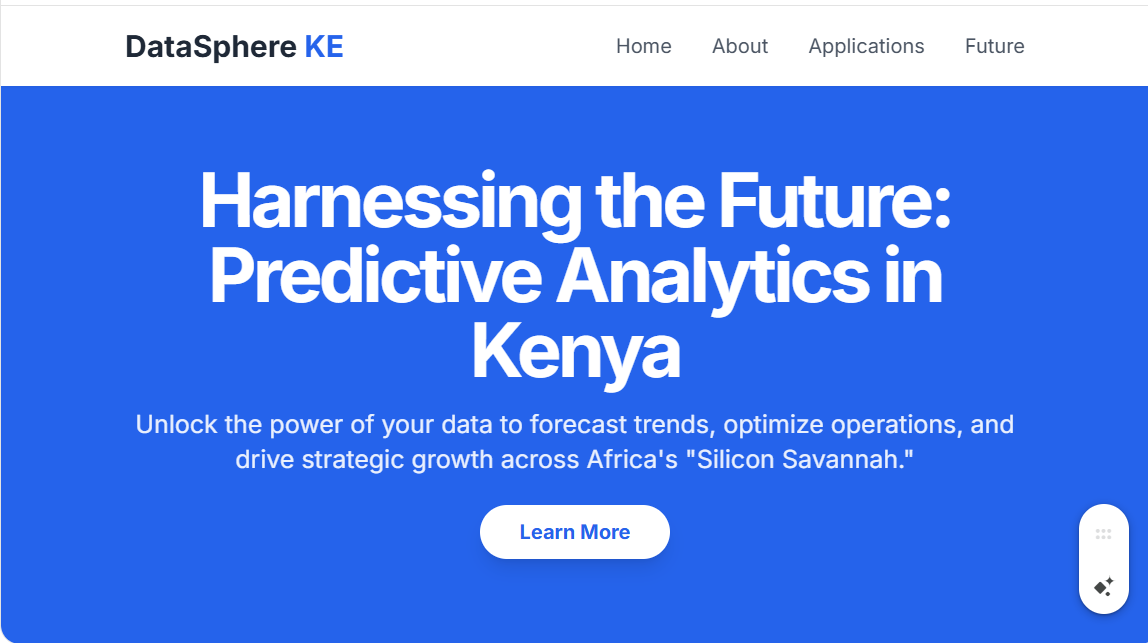
Unlock the power of your data with Predictive Analytics in Kenya. We help businesses across finance, healthcare, retail, and agriculture leverage advanced statistical modeling and machine learning to forecast trends, optimize operations, detect fraud, and drive strategic growth. Learn how data-driven insights are transforming the Kenyan business landscape.
Predictive analytics is a powerful field of data science that uses historical data, statistical algorithms, and machine learning to forecast future outcomes. In Kenya, this technology is rapidly gaining traction as businesses across various sectors recognize its potential to transform decision-making, enhance operational efficiency, and gain a competitive edge. The rise of digital platforms, mobile technology, and a growing interest in data-driven strategies have positioned Kenya as a regional leader in the adoption of these advanced analytical techniques.
At its core, predictive analytics answers the question: “What is most likely to happen next?” It goes beyond simply describing past events to actively predicting future ones. This is achieved through a variety of techniques, including regression analysis, decision trees, and neural networks, which are used to identify patterns and relationships in large datasets. These insights enable organizations to move from reactive to proactive strategies, making more informed and timely decisions.
The applications of predictive analytics in Kenya are diverse and impactful. In the financial sector, banks and mobile money platforms like M-Pesa use it for fraud detection, credit risk assessment, and personalizing financial products. By analyzing transaction histories and customer behavior, these institutions can identify suspicious activities in real-time and offer tailored services, reducing losses and improving customer satisfaction. The insurance industry, for example, is using predictive models to assess risk, manage claims, and even incentivize healthy behaviors through wellness programs.
The retail and e-commerce sectors are also major beneficiaries. Predictive analytics helps businesses forecast demand, optimize inventory management, and create highly targeted marketing campaigns. By understanding consumer purchasing patterns and preferences, retailers can ensure they have the right products in stock at the right time, reducing waste and boosting sales. This also allows for the creation of personalized offers and recommendations, enhancing the customer experience and fostering loyalty.
Furthermore, predictive analytics is making significant contributions to the healthcare sector in Kenya. It is being used to predict disease outbreaks, identify high-risk patients for chronic illnesses, and optimize the allocation of hospital resources. These capabilities lead to improved patient care, reduced costs, and more efficient healthcare delivery. In agriculture, a vital sector for the Kenyan economy, predictive analytics helps farmers and agribusinesses with demand forecasting and supply chain management, mitigating risks like post-harvest losses and enhancing overall efficiency.
The future of predictive analytics in Kenya is bright, with several key trends shaping its trajectory. The increasing adoption of Artificial Intelligence (AI) and machine learning is making predictive models more sophisticated and accurate. The rise of cloud-based analytics is also making these powerful tools more accessible to businesses of all sizes, eliminating the need for massive on-premise infrastructure. Additionally, as data privacy and security become a greater focus, companies are investing in robust measures to ensure that their use of predictive analytics is both ethical and compliant with regulations.
Challenges remain, including the need for a skilled workforce and reliable data infrastructure. However, with various training institutes and academic programs emerging in Kenya to address this skills gap, the country is well on its way to building a robust ecosystem for data science and predictive analytics. By harnessing the power of data, Kenyan businesses are not just predicting the future; they are actively shaping it, driving innovation, and fostering sustainable growth in a data-driven world.
Another key area where predictive analytics is making a difference is in the energy and utilities sector. Companies like Kenya Power and Lighting Company are exploring frameworks to use predictive analytics to improve supply chain management, forecast energy demand, and predict equipment maintenance needs. This proactive approach helps to reduce downtime, enhance operational reliability, and improve overall service delivery.
The future of predictive analytics in Kenya is bright, with several key trends shaping its trajectory. The increasing adoption of Artificial Intelligence (AI) and machine learning is making predictive models more sophisticated and accurate. The rise of cloud-based analytics is also making these powerful tools more accessible to businesses of all sizes, eliminating the need for massive on-premise infrastructure. Additionally, as data privacy and security become a greater focus, companies are investing in robust measures to ensure that their use of predictive analytics is both ethical and compliant with regulations.
Challenges remain, including the need for a skilled workforce and reliable data infrastructure. However, with various training institutes and academic programs emerging in Kenya to address this skills gap, the country is well on its way to building a robust ecosystem for data science and predictive analytics. By harnessing the power of data, Kenyan businesses are not just predicting the future; they are actively shaping it, driving innovation, and fostering sustainable growth in a data-driven world.
Conclusion
In conclusion, predictive analytics is no longer a niche technology but a foundational tool for business success in Kenya. Its transformative impact is evident across a wide array of sectors, from finance and retail to healthcare and agriculture. By leveraging predictive insights, Kenyan organizations are moving beyond guesswork and intuition to make data-driven decisions that improve efficiency, reduce risk, and create new opportunities for growth. While challenges like data quality and the need for specialized skills persist, the momentum of technological adoption and the growing availability of local talent signal a promising future. As Kenya continues to solidify its position as Africa’s “Silicon Savannah,” predictive analytics will be a key driver of innovation, helping businesses to not only survive but thrive in an increasingly competitive global market.