Geospatial Analysis Kenya:

-
Delivery Time2 Weeks
-
English levelProfessional
-
LocationUSA, United Kingdom, United Arab Emirates, Nairobi, Kilimani, Kenya, Dubai, CBD Nairobi, Canada, Australia

Service Description
The cost of Geospatial Analysis in kenya 350000KES.Get Geospatial Analysis in kenya at a cost of 300000KES at Black Shepherd Technologies.
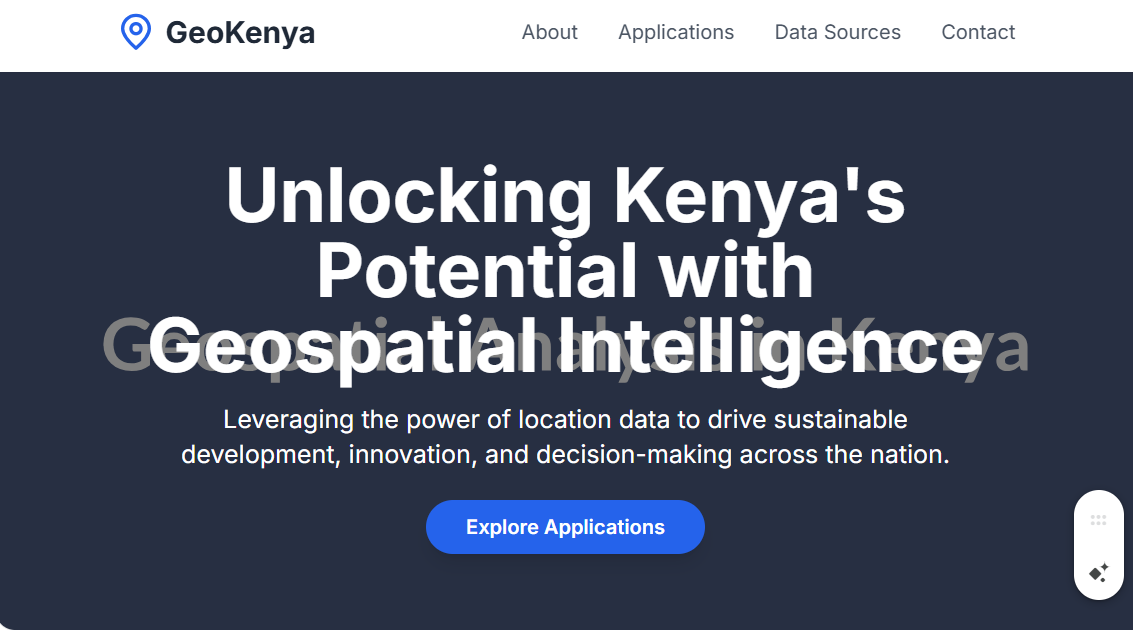
Explore the power of geospatial analysis in Kenya. Our comprehensive guide covers GIS, remote sensing, and spatial data applications for sustainable development, urban planning, agriculture, and environmental management. Discover how location-based intelligence is shaping Kenya’s future and find expert insights and resources.
Geospatial analysis, the process of using geographic data and technologies to analyze and interpret spatial patterns and relationships, is a rapidly growing and transformative field in Kenya. It encompasses a wide range of tools and techniques, including Geographic Information Systems (GIS), Remote Sensing (RS), and Global Positioning Systems (GPS). These technologies are being harnessed across various sectors to drive informed decision-making, optimize resource management, and address some of the country’s most pressing challenges.
In Kenya, the application of geospatial analysis is vast and impactful. In agriculture, for instance, it’s used to monitor crop health, predict yields, and manage irrigation, helping to enhance food security and promote precision farming. By analyzing satellite imagery and soil data, farmers and agricultural organizations can make data-driven decisions to boost productivity and resilience. This is particularly crucial for a country where a significant portion of the population relies on agriculture for their livelihood.
Urban planning and infrastructure development are also being revolutionized by geospatial analysis. As cities like Nairobi continue to expand, planners are using GIS to map population density, assess land use patterns, and model the impact of new construction projects. This helps in creating more efficient and sustainable urban environments, from designing better transportation networks to ensuring equitable access to public services and utilities. The government’s push for the establishment of a National Spatial Data Infrastructure (NSDI) is a testament to the recognition of geospatial data as a critical asset for national development.
Environmental management and conservation efforts in Kenya are heavily reliant on geospatial analysis. Remote sensing data from satellites and drones provides a powerful means to monitor deforestation, track wildlife migration patterns, and assess the health of ecosystems. Conservationists can use this information to identify areas at risk, enforce environmental regulations, and plan targeted interventions to protect Kenya’s rich biodiversity. Similarly, in disaster management, geospatial tools are vital for mapping flood-prone areas, assessing damage after a natural disaster, and coordinating emergency response efforts.
The health sector is another area where geospatial analysis is making a significant difference. By mapping disease outbreaks, healthcare providers can identify hotspots, understand the factors contributing to their spread, and allocate resources more effectively. This is particularly important for public health initiatives aimed at combating diseases like malaria or improving access to healthcare facilities in remote areas.
Beyond these applications, geospatial analysis is also integral to land administration and cadastral surveying, providing a modern and efficient way to manage land records, resolve boundary disputes, and ensure secure land tenure. This is a crucial step towards economic development and social stability.
The growth of geospatial analysis in Kenya is supported by a burgeoning community of professionals, academic institutions offering specialized training, and a number of private companies and government agencies that are investing in these technologies. The Geospatial Society of Kenya (GeoSK) and other similar organizations play a key role in promoting the field, fostering collaboration, and setting professional standards.The Kenyan government has recognized the importance of geospatial analysis and is actively integrating it into national planning and governance. One significant example is the use of GIS and geospatial technology in managing and mapping the 2019 Kenya Population and Housing Census. This project utilized high-resolution satellite imagery and aerial photographs to delineate enumeration areas, ensuring accurate and complete coverage. This demonstrates the government’s commitment to evidence-based decision-making.
Furthermore, County Governments are mandated by the County Government Act, 2012, to prepare ten-year GIS-based spatial plans as part of their integrated development plans. This has led to numerous projects at the county level, such as the Kakamega County Spatial Plan and the Kilifi Municipality Integrated Strategic Urban Development Plan, which aim to guide land use and development in a sustainable manner. The government is also pushing for a modern geodetic reference system and nationwide large-scale mapping to address the fact that nearly 70% of the country, particularly the northern regions, remains either unmapped or relies on outdated data.The private sector is a vital component of Kenya’s geospatial ecosystem. Companies like Orbital Africa, Advanced Geospatial Solutions (AGS), and Geosurf Surveys Limited offer a wide range of services, including drone mapping, 3D laser scanning, and LiDAR surveys for various clients, including government agencies, NGOs, and private enterprises. These firms are instrumental in providing expertise and implementing geospatial projects, from topographical surveys for infrastructure projects to land subdivision planning. The Regional Centre for Mapping of Resources for Development (RCMRD), an intergovernmental organization based in Nairobi, also plays a crucial role in providing geospatial services, training, and capacity building across the region.Despite the significant progress, Kenya’s geospatial sector faces several challenges. These include a poor enabling environment, limited capacity for data development, and inadequate access to the necessary infrastructure. Many datasets are still in analogue form, are not regularly updated, and lack consistency across different organizations. The cost of obtaining, storing, and managing high-quality remote sensing data remains a barrier for many government and non-governmental entities. Additionally, a lack of standardization and legal frameworks for data sharing and management has historically hampered the development of a fully functional National Spatial Data Infrastructure (NSDI).
The future of geospatial analysis in Kenya is, however, promising. The increasing integration of Artificial Intelligence (AI) and Machine Learning (ML) with geospatial technologies is set to revolutionize data interpretation and predictive analysis. This will enable more automated tasks like land use classification and disaster assessment. With ongoing efforts to develop a modern geospatial infrastructure and a growing number of trained professionals, Kenya is well-positioned to leverage location-based intelligence for a smarter, more sustainable future.
In conclusion, geospatial analysis in Kenya is not just a technological trend; it is a fundamental tool for progress and sustainable development. It provides the location-based intelligence needed to navigate complex challenges in a variety of sectors, from the environment to the economy. As the country continues to invest in its digital future, the role of geospatial data and analysis will only become more central to its development agenda.